The Best Citizen Science Can’t Offset Cuts to Government Research
By Michael Reinemer – Editor, Outdoor America
(For more articles from the magazine, visit iwla.org/outdoor-america-magazine.)
Between layoffs and budget cuts, federal support for science is shrinking. The Washington Post reported that through March 31, 2026, National Institutes of Health grants have fallen by more than half compared to the number of grants awarded for the same period last year.
On April 27, the New York Times reported that at EPA, 1,500 experts in the Office of Research and Development, including biologists and chemists, have been “laid off, reassigned or pressured to retire.” The remaining 124 researchers faced the choice of reassignment or leaving the agency by the end of the month.
“Those who stay will no longer serve in an independent unit designed to be free from political interference,” writes Lisa Friedman for the Times. “Instead, they will be overseen by Trump appointees or in a new unit directly under the administrator, Lee Zeldin. An internal memo in one office reviewed by Times says its future research must ‘align with agency and administration priorities.’”
While some cuts to funding and grants have been paused, the Trump administration has sharply reduced scientific research as a federal priority. What we are likely to lose as a result is institutional knowledge, independence and continuity at federal agencies as scientists are terminated and programs and research infrastructure atrophy.
“Uncertainty has become the norm,” writes Nara Parameswaran in The Conversation. A dean at the College of Human Medicine at Michigan State, Parameswaran says the decline in sustained federal research affects continuity in research and career decisions for graduate students. It risks “erasing an entire generation of scientists, with consequences that will reverberate for many years.”
Hostility to the concept of diversity, equity and inclusion also hurt some science programs that included elements of DEI. The mere association with DEI made many programs targets for cuts, says Jay Benforado, a retired EPA leader who chairs the board at the Association for Advancing Participatory Sciences.
Respect for science declined slightly during COVID-19, but a Pew Research Center survey in October 2024 found that three out of four Americans have confidence in scientists to act in the public’s best interest.
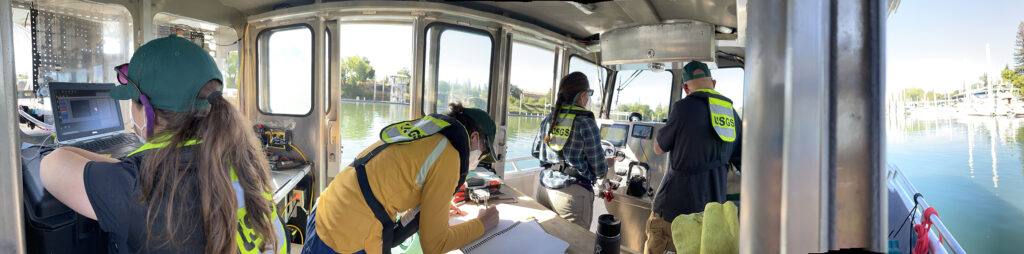
In the wake of these cuts, what does it mean for citizen science? Volunteers across the U.S. gather data on many fronts including weather, biodiversity, water quality, wildlife, air pollution and disaster response.
Can citizen science help to fill the growing gaps?
(A variety of terms are used to label this type of science, including community or participatory science or participatory research.)
A vital role for citizen science
In her book, Citizen Science: How Ordinary People are Changing the Face of Discovery, Caren Cooper writes, “New knowledge is the main product of citizen science. Civically engaged people, stewards of natural resources, communities empowered with new knowledge, and social ties: these are a few of the by-products of citizen science that are key to conservation and environmental justice.”
“Citizen science data are important, now more than ever,” Cooper said in a recent email. She cautioned that “running and managing a citizen science project requires funds. Even though people volunteer, it’s not an entirely free source of data.”
Cooper said she had a $2 million National Science Foundation award related to broadening engagement in participatory science that was terminated. Cooper is associate professor of Forestry and Environmental Resources at North Carolina State University.
Nitrate monitoring in Iowa provides example of how citizen science fits into a larger context, which Zach Sommers reported in the Iowa Capital Dispatch in March. The Iowa Water Quality Information System (IWQIS) provides robust, sustained water quality data and is operated by the University of Iowa. The system faces a funding cut off this year, so advocates including the Izaak Walton League are pressing Iowa legislators to continue financial support for the water sensor system.
Heather Wilson, who manages the League’s Nitrate Watch program, told the Dispatch, “The water sensor network is just irreplaceable. We stand to lose so much with the loss of that network.” IWQIS provides consistent, carefully monitored water sampling conducted by university scientists at a scale that volunteers can’t match. Wilson says the role of Nitrate Watch has always been to supplement, not replace, monitoring by the state and other organizations.
Michele Prysby, director of the Virginia Master Naturalist Program, agrees that citizen science serves as a complement to and not a replacement for what scientists and government agencies do.
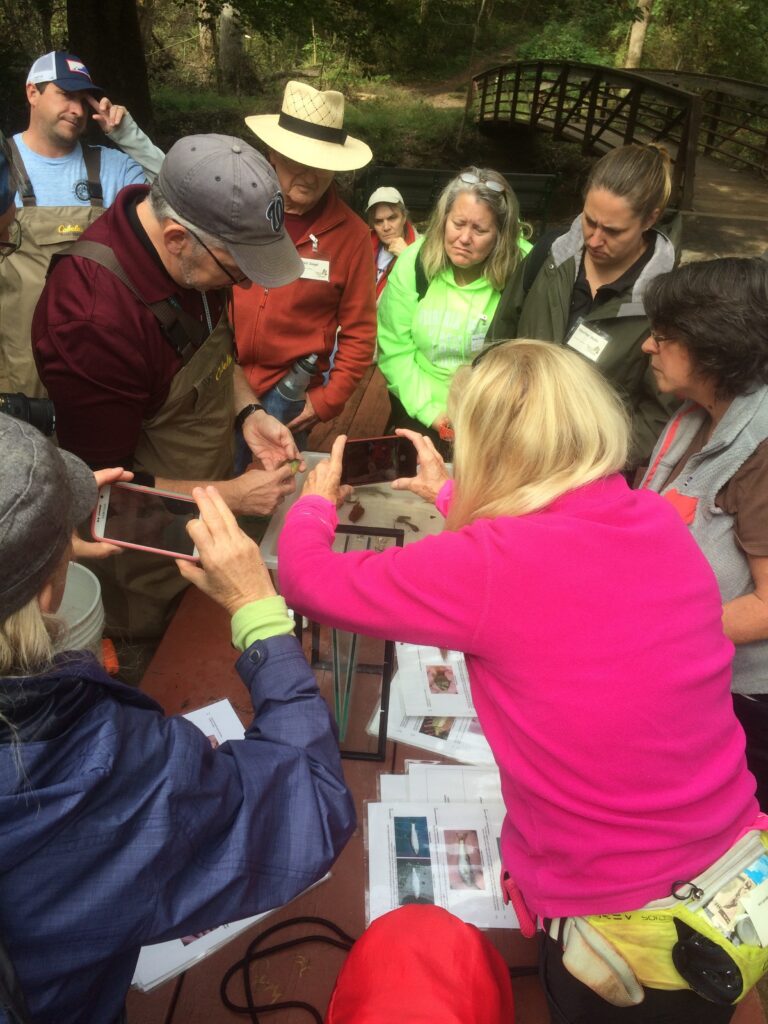
“While participatory science can indeed help fill a gap, we need to be wary of thinking that it can operate without leadership or scientist involvement,” she says. “We still need experienced scientists to help set up or vet protocols, analyze data.”
Prysby cites the role of volunteer water monitoring in Virginia that detected and documented E. coli pollution after hundreds of tests and more than 700 hours of volunteer time. The work paid off: repairs and infrastructure improvements were made by the local sanitation district.
Pushback reveals the real power
“I think that evidence of the effectiveness and power of citizen science is in the push-back against it,” Cooper tells us.
“For example, a new industry-friendly Louisiana law bans the use of volunteer-collected data in the context of monitoring air pollution. And the same could happen to water monitoring.” The law raised concerns across the citizen science spectrum.
For a number of years, EPA provided funds for a volunteer air monitoring in Sulfur, a Louisiana town located near industrial plants. A group called Micah 6:8 began to distribute information about the quality of local air. But in May 2024, the state enacted a law that limits data sharing about air quality unless the data meets strict requirements, the AP reported. Citing free speech and the importance of public health, Micah 6:8 sued the state.
Opportunities to solve problems
Benforado says the field of citizen science is broad and diverse. Some types of data collection—like water monitoring—have a longer history of collaboration and trust compared to monitoring air pollution.
As humans, we face numerous challenges that require an all-hands-on-deck approach. That affords rich opportunities for the field of citizen science as a whole, says Jennifer Shirk, executive director of the Association for Advancing Participatory Sciences. She believes we can establish career pathways, credentials and infrastructure that capitalize on the value of this kind of work.
There are good models for working across disciplines and interests. Shirk cited monitoring of commercial fish populations as an example of collaboration and trust established over time where the commercial and conservation interests are integrated into the process.
“The work of science is nonpartisan,” says Benforado. “And any environmental problem has a citizen science dimension.”
Side Note
In 1912, my grandparents staked a claim to a quarter section of land (160 acres) on the unforgiving prairie of eastern Montana, several miles up Lost Creek from Circle. In the early 1900s, about 80,000 people moved to the Treasure State to try farming, encouraged by a shorter period required for “proving up” your land claim (from five years to three), thanks to the Homestead Act of 1912.
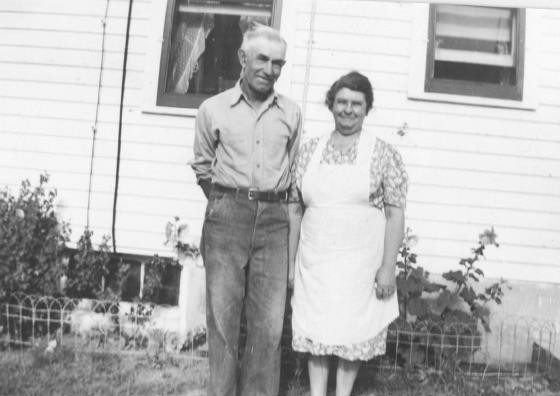
At the time, the weather information and farming strategies for this region were not well understood, and in 1918 a devastating drought struck. It killed cattle and crops, blew away topsoil and drove most of those homesteaders back to their previous homes.
Somehow, my grandfolks, Henry and Ida, produced enough from the land to stay on—raising chickens, wheat, cattle, horses and three children. Very involved in soil conservation and the community, they added a new “chore,” as my grandmother put it, in May 1930. They took over the task of collecting weather data, which a neighbor had been tracking and reporting since 1902.
By taking on that task, my grandparents joined the U.S. Cooperative Weather Observers—and stuck with it for 38 years, citizen scientists collecting data until 1968.
Established in 1891, the National Weather Service Cooperative Observer Program is the oldest weather network in the U.S. and one of the oldest participatory science programs. It enlists more than 11,000 volunteers today who donate about one million hours each year.
Resources
- Association for Advancing Participatory Sciences, formerly known as the Citizen Science Association. participatorysciences.org.
- CitizenScience.gov, usa.gov/citizen-science.
- Conservation organizations, whether the Izaak Walton League of America, National Audubon Society, Trout Unlimited, Cornell Lab.
- European Citizen Science Association. Prysby recommends their Ten Principles of Citizen Science paper (ecsa.ngo/10-principles), which outlines best practices for high quality and ethical citizen science.
- The Field Guide to Citizen Science, by Darlene Cavalier, Catherine Hoffman and Caren Cooper, 2020
- SciStarter, iNaturalist, eBird and other citizen science programs and platforms.
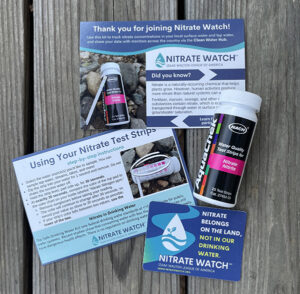 Your kit will include a bottle containing 25 nitrate test strips which you can use to test your water source(s) throughout the year. You’ll also receive postcards explaining how to use your nitrate test strips and how to share your Nitrate Watch results on the Clean Water Hub.
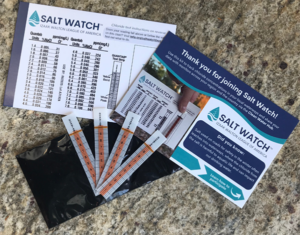 Your kit will include four test strips so you can test your waterway throughout the season. You’ll also receive a chart to help you interpret your results and a postcard with instructions for completing a Salt Watch test and reporting your findings.