Nitrate Pollution Awareness Week, July 26-August 1, 2026 Tip Sheet
During Nitrate Pollution Awareness Week, July 26-August 1, 2026, experts and clean water advocates will discuss the dimensions of the threat to drinking water and the environment as well as solutions to the problem.
Nitrate (NO3–) is a naturally occurring compound made up of nitrogen and oxygen that is an essential nutrient for plants. But human activities add more nitrogen than plants and soils can use. As nitrogen moves through the environment, it becomes nitrate, which is soluble in water. That means it can wash off farmlands and lawns by rainwater, irrigation systems or melting snow into waterways and groundwater.
Excess nitrate poses problems for human health and the environment. When we consume high levels of nitrate in drinking water, certain conditions including blue baby syndrome, cancers, thyroid disease and birth defects are more likely. Reducing nitrate in drinking water to safe levels is expensive and often requires additional clean water to dilute the nitrate.
Contacts:
Michael Reinemer, Communications Director, mreinemer@iwla.org
Samantha Puckett, Clean Water Program Director, spuckett@iwla.org
Below are key topics and a list of four webinars featuring experts on nitrate pollution.
Nitrate in drinking water is linked to serious health problems
Excess nitrate in water poses health risks to humans such as increased incidence of thyroid disease, pre-term births, neural tube defects and cancers. In terms of ensuring safe drinking water, the EPA standard (set in 1962) is 10 milligrams per liter, or roughly 10 parts per million. However research suggests that prolonged exposure to nitrate levels at lower levels can pose health threats.
Dead zones, fish kills and other damage to the environment
In aquatic ecosystems, nitrate can have disastrous impacts, including the creation of harmful algal blooms (HABs), fish kills and dead zones—including the large dead zone in the Gulf of Mexico.
Advocates seek policies and practices that reduce pollution
Clean water advocates are urging policymakers at the federal, state and local levels to make clean water a priority by supporting policies that reduce nitrate pollution. Policy solutions include funding and incentivizing agricultural practices that reduce pollution, prioritizing natural solutions such as wetlands, increasing support for private-well monitoring and cleanup and reducing pollution at its source rather than shifting costs to taxpayers. The Farm Bill debate currently unfolding in Congress presents opportunities to invest in these solutions nationwide.
Volunteers monitor local waterways to measure threat level
Across the country, hundreds of volunteers participate in the Nitrate Watch program by documenting the nitrate in local waterways and drinking water. Each Nitrate Watch kit includes 25 nitrate-N test strips and instructions for testing water and sharing results on the Clean Water Hub database, which allows the public and researchers to examine nitrate levels around the U.S. www.cleanwaterhub.org.
Best practices to reduce nitrate washing off farmland
While nitrogen washing off agricultural land accounts for most nitrate pollution in our drinking water supplies, there are strategies to cultivate resilience on agricultural landscapes to improve water quality. In-field practices such as cover crops can improve soil health and keep nitrogen where it belongs—in the field. Other practices can be installed alongside farmland, such as stream buffers, bioreactors and saturated buffers, to naturally denitrify water before it reaches waterways.
Simple steps at home to reduce nitrate pollution
Consumers can take steps at home to help:
- Use fertilizer wisely on lawns.
- Try conservation landscaping that leverages the power of plants to filter water and remove pollutants.
- Maintain septic systems to ensure they don’t leak wastewater which is high in nitrogen.
- Keep storm drains clear and pick up after your pets.
- Reducing Nitrate Pollution At Home Fact Sheet
Climate and nitrate pollution are tightly linked
This link between nitrate in waterways and prevailing temperature and precipitation trends hints at a larger connection between nitrate pollution and climate. These two environmental issues, each formidable on their own, are intertwined.
The sources of nitrate pollution are, in some cases, the same as the causes of climate change. Outdoor America article on this topic.
Impact on outdoor recreation
Right now, a number of lakes across the US are off-limits for swimming and recreation due to HAB caused by excess nutrients like nitrate. Lakes plagued by HAB also pose a health risk to dogs and other animals.
Webinars week of July 27-31, 2026
Monday, July 27, 2026, 1:00 – 2:00 pm EDT
Welcome to Nitrate Pollution Awareness Week, Samantha Puckett, Jessica Gordon
Nitrate Pollution Awareness Week is a new initiative of the Izaak Walton League of America aimed at amplifying education, monitoring and advocacy surrounding nitrate pollution in water. Why does it matter? What can we do about it? Join the League’s Clean Water Program Director Samantha Puckett and Grassroots Advocacy Manager Jessica Gordon to find out. Register.
Wednesday, July 29, 2026, 1:00 – 2:00 pm EDT
An invisible threat: Nitrate in drinking water, Dr. David Cwiertny, University of Iowa
Join David Cwiertny, Director of the University of Iowa Center for Health Effects of Environmental Contamination, to explore how nitrate contamination in water systems threatens public health. The session will distill research into clear takeaways, highlighting links between nitrate exposure and adverse health outcomes including cancers, thyroid disease and birth defects. Register.
Thursday, July 30, 2026, 1:00 – 2:00 pm EDT
Regenerative Solutions for Soil Health and Water Quality, Dr. Matt Liebman, Iowa State
Environmental stewardship and farm profitability are not mutually exclusive. Join Dr. Matt Liebman, Iowa State University Professor Emeritus, as he draws from decades of research to describe actionable strategies to cultivate resilience on agricultural landscapes to improve water quality. Regenerative practices can significantly reduce nitrate pollution and restore soil health without sacrificing the bottom line. Register.
Friday, July 31, 2026, 1:00 – 2:00 pm EDT
Nitrate Pollution and the Dead Zone: Insights from the Gulf, Dr. Cassandra Glaspie of Louisiana State University
Each summer, the Gulf of Mexico develops a hypoxic “dead zone,” an area of low to no oxygen spanning thousands of square miles where aquatic life is scarce. Dr. Cassandra Glaspie of Louisiana State University will provide a close look at the Gulf’s dead zone and its connection to nitrate pollution from the Mississippi River Basin. Returning from her recent research cruise focused on hypoxia, Dr. Glaspie will share insights about what long-term nutrient dynamics reveal about the health of our coastal waters. Register.
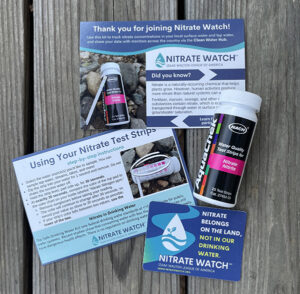 Your kit will include a bottle containing 25 nitrate test strips which you can use to test your water source(s) throughout the year. You’ll also receive postcards explaining how to use your nitrate test strips and how to share your Nitrate Watch results on the Clean Water Hub.
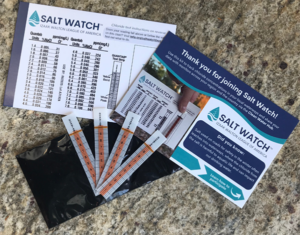 Your kit will include four test strips so you can test your waterway throughout the season. You’ll also receive a chart to help you interpret your results and a postcard with instructions for completing a Salt Watch test and reporting your findings.