2026: VA SOS’s Biggest Spring Yet
By: Maggie Dombroski, Mid-Atlantic Save Our Streams Coordinator
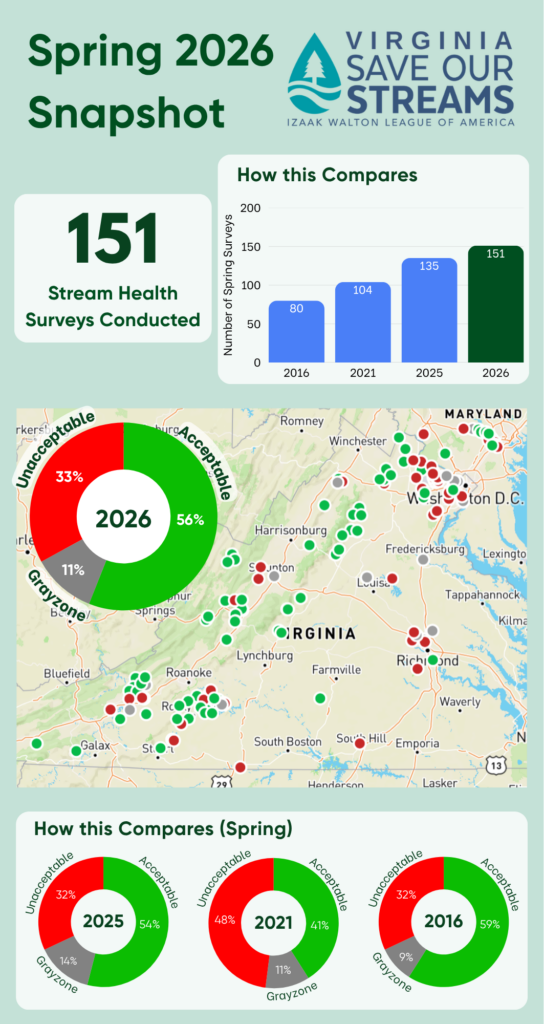
The Spring 2026 Virginia Save Our Streams (VA SOS) data is in and it’s our biggest spring yet!
Certified volunteers collect VA SOS benthic macroinvertebrate data seasonally during the spring (March 1–May 30) and fall (September 1–November 30) monitoring periods, which provide optimal conditions for benthic assessment and align with the Virginia Department of Environmental Quality’s windows for accepting volunteer-collected data. This spring, 127 certified monitors conducted 151 stream health surveys across the states of Virginia and Maryland. That’s more than any previous spring in VA SOS history.
The real value and impact of VA SOS data comes from collecting it long-term. That’s why we encourage our monitors to return to the same stream sites season after season, year after year. This allows a baseline to be established for the stream, which is important so that we can identify any deviations from the baseline – for better or worse – in the future.
Because we have such a volume of data from many years, we can evaluate the state of the streams in Virginia from year to year. This spring, 56% of the streams sampled fell into the “acceptable” stream health range. 33% were “unacceptable”, with the remaining 11% falling to the “grayzone” – meaning those streams’ health status can’t be determined at this time. As you can see from the data on the right, while there is some variation year to year, this is in the typical range of stream health breakdowns for the state over the past ten years.
VA SOS Leaderboard
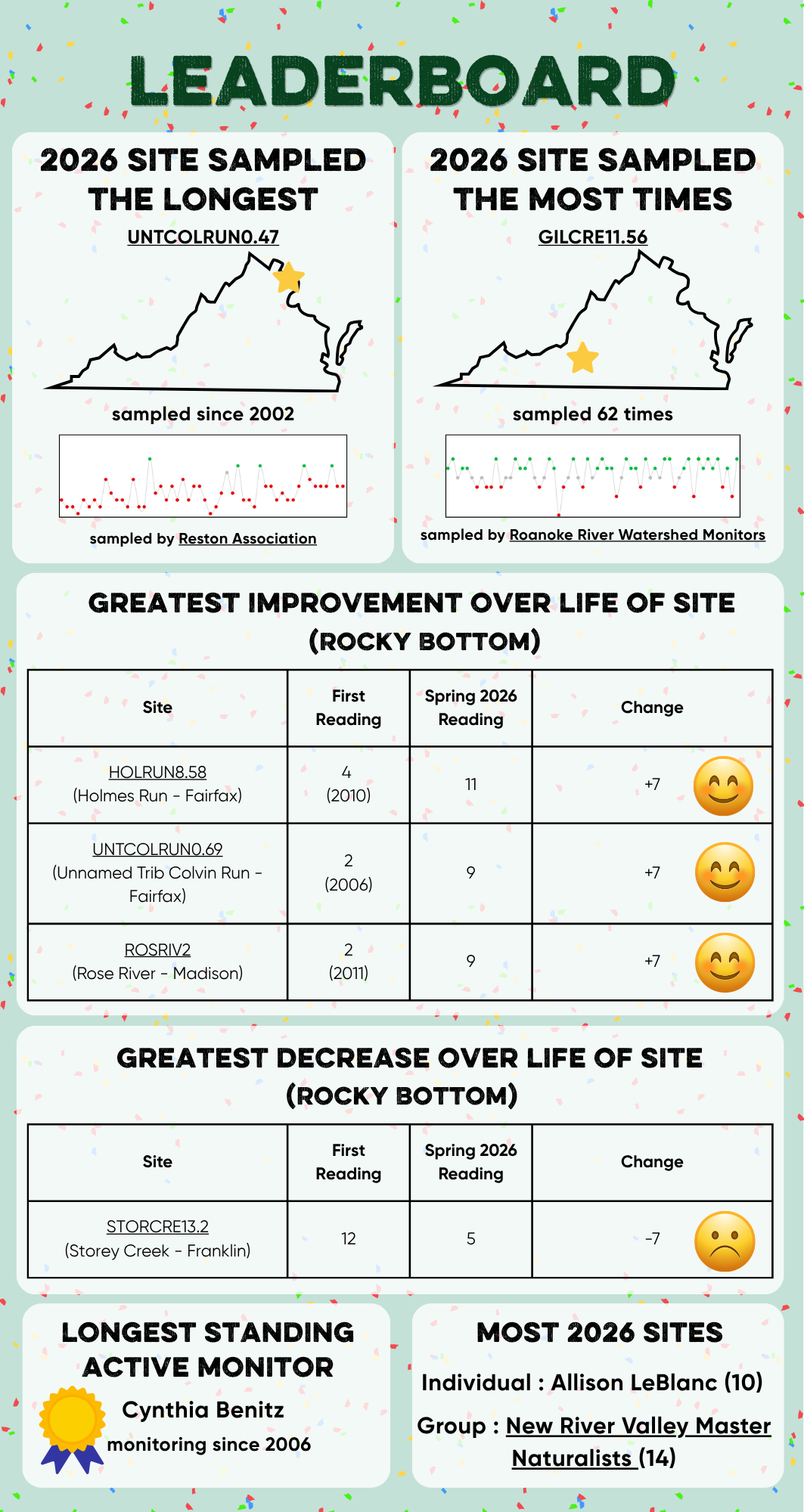
This spring, we put together the first-ever VA SOS Leaderboard to highlight some of the most prolific sites, monitors, and groups! We hope to update this seasonally and expand the concept out to our other monitoring programs as well.
As mentioned above, VA SOS has been collecting data on the health of Virginia’s streams for many years – more than 20 in the case of our oldest continuously sampled site. An Unnamed Tributary of Colvin Run in Fairfax County claims this title. It has been sampled 53 times over 24 years by Reston Association volunteers. As you can see from the graph of the site’s health scores on the right, besides a few spikes into grayzone and acceptable, the stream has consistently had unacceptable health. This site is located in a highly developed area near several major roadways.
The site that has been sampled the largest number of times over its history is on Gills Creek in Franklin County. The Roanoke River Watershed Monitors have surveyed this site 62 times since 2007 – equating to an impressive average of 3 samples per year.
The Rose River in Madison County, one of the sites which experienced a significant positive change in health, was featured earlier this year in Outdoor America. The stream sustained significant damage during Hurricane Helene in 2024, causing the health score to drop during the following few seasons. It is great to see that certified monitor Alan Edmunds’ hopes from last fall are coming to fruition: “I’m really looking forward to spring, because I expect that in the spring, I’ll see that those scores start to come back up again.”
The site that has experienced the greatest decrease in score over its life has also been affected by extreme weather – highlighting the impact of climate change on our stream ecosystems. Certified monitor trainer Chekka Lash, a biology professor at Ferrum College, reports that the area around her Storey Creek site in Franklin County experienced severe flooding in June 2025, which changed the morphology of the stream. Previously one wide channel, the stream is now split into two with an island in the middle. Although the stream still scored in its usual range last fall, when Chekka headed out to monitor in April, she believes the combination of the split channel and low water levels due to drought resulted in unsuitable macroinvertebrate habitat. The stream scored only a 5, in the unacceptable health range.
We are so grateful to all of our VA SOS volunteers for faithfully monitoring and advocating for the protection of Virginia’s streams season in and season out. Stay tuned for an updated leaderboard and more stream health results following our fall monitoring season!
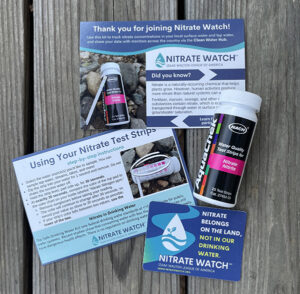 Your kit will include a bottle containing 25 nitrate test strips which you can use to test your water source(s) throughout the year. You’ll also receive postcards explaining how to use your nitrate test strips and how to share your Nitrate Watch results on the Clean Water Hub.
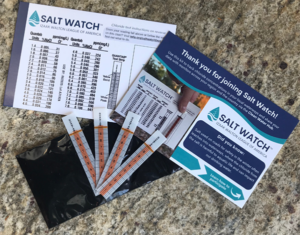 Your kit will include four test strips so you can test your waterway throughout the season. You’ll also receive a chart to help you interpret your results and a postcard with instructions for completing a Salt Watch test and reporting your findings.