After the Flood: The Hidden Ecological Toll of Hurricane Helene
By: Maggie Dombroski, Save Our Streams Coordinator
In September 2024, Hurricane Helene dominated national headlines as it tore through western North Carolina and east Tennessee, leaving a trail of decimated towns and fractured lives.
While the staggering loss of 250 souls and $78 billion in property damage defined the immediate tragedy, a quieter crisis unfolded beneath the surface of the region’s waterways. Beyond the ruined roads and leveled homes lies another overlooked, yet lasting impact: the widespread upheaval of small-stream ecosystems and the vital macroinvertebrate populations that sustain them.
Fly fisherman and Virginia Save Our Streams monitor Alan Edmunds has experienced these impacts firsthand. Edmunds has been monitoring several rivers east of the northern Blue Ridge Mountains with the Old Rag chapter of the Virginia Master Naturalists (ORMN) for the past four years. Old Rag Master Naturalists (ORMN) is a volunteer organization dedicated to conserving and managing natural resources in Virginia through education, citizen science and stewardship. Save Our Streams is one of the many projects that they support. Two years ago, he took over as the lead monitor for the Rose River, which ORMN volunteers have been sampling since 2011.
“I love the Rose River,” said Edmunds, “because I’ve been fishing it my whole life.”
The Rose River, which flows 8.8 miles southeast from Hawksbill Mountain in Shenandoah National Park to its confluence with the Robinson River, was impacted by Hurricane Helene, which dumped 40 trillion gallons of water throughout the southeastern U.S. Virginia received 10-15 inches of rain during the storm.
How Floods Can Degrade Streams
Helene caused significant damage to the area surrounding the Rose. “We had roads that were completely covered, bridges were covered,” recalled Edmunds, “The entire streambed was moved in certain places. Rocks got thrown all over the place. There was a lot of erosion and a few bushes and trees were washed away.”
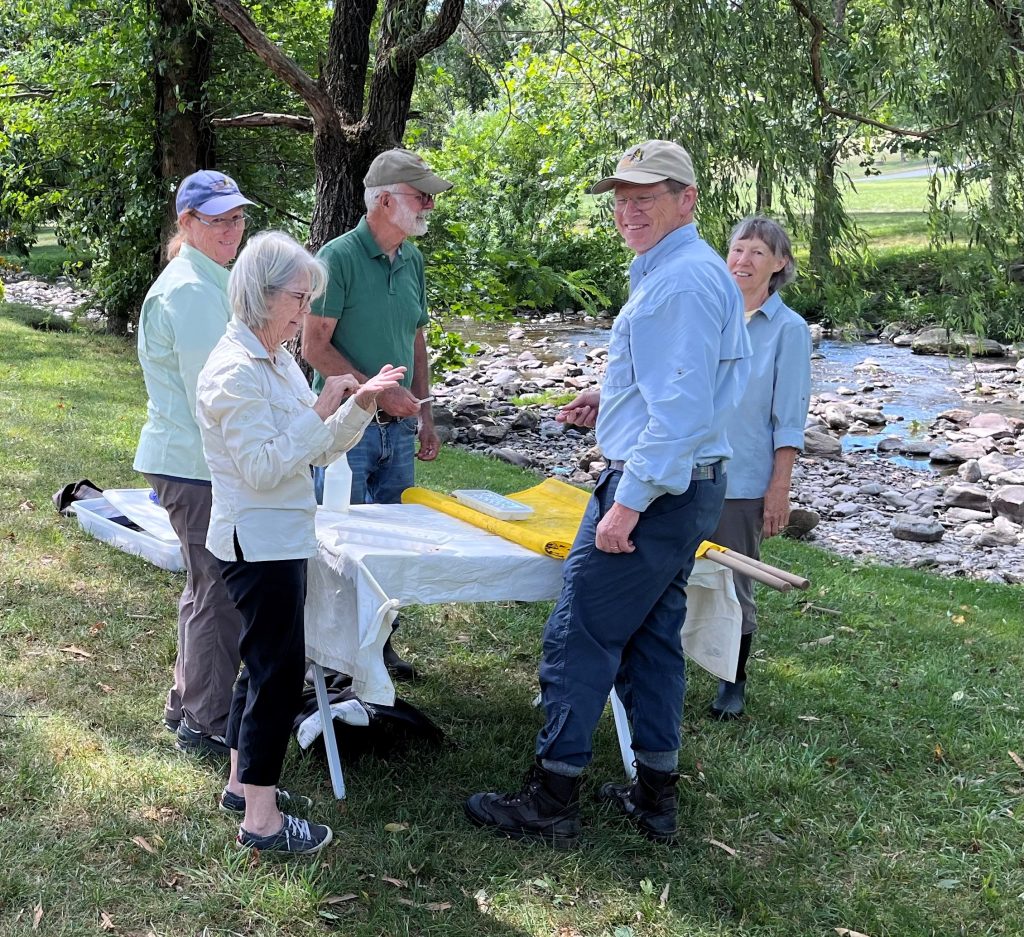
Prior to the storm, ORMN’s sample site on the Rose River always received high marks in terms of stream health. “It was a top performing little stream,” reported Edmunds, “We always found mayflies, stoneflies and caddisflies. It was always fun to find water pennies and things like that, which really don’t live in polluted water.”
Because the River was so great for demonstrating aquatic life, the testing site was often used for education events like Envirothon trainings and Meaningful Watershed Education Experiences with area school children.
After the storm, stream health scores declined, entering into the “unacceptable” range for the first time since 2011. “The insect life in that area went down significantly from what it had been,” stated Edmunds. “What happened, in my opinion, was that the stream bed was scoured by the storm, washing away the macroinvertebrates and the debris that the macroinvertebrates feed and shelter in, leaving a significantly reduced habitat for the few that remained to feed and thrive.”
Interestingly, although the storm hit all ORMN’s monitoring sites severely, the other sites did not experience a distinct drop off in stream health score like the Rose did. This variation in impact among different streams correlates with broader findings in the region.
In late 2024, the North Carolina Department of Environmental Quality (NC DEQ) conducted a study of post-Helene macroinvertebrate populations across the state. The study had varied results—there was a 28.5% reduction in macroinvertebrate abundance overall, but some streams had significantly reduced macroinvertebrate populations, and a few had almost no bugs at all, while other streams were relatively unaffected. NC DEQ found that the greatest reductions in macroinvertebrate populations corresponded to sites with the greatest loss of vegetation along the streambanks and the greatest habitat degradation.
The differences in amounts of this riparian vegetation and available habitat could be a factor in the differences in the effects of the Hurricane on ORMN’s monitoring sites. The Rose River site is unique among their sites in that it is not in a natural area, but rather on a property that has been open to the public since 1965 and features ample outdoor recreation opportunities. Shortly after the storm, the streambed of the river at the site was rebuilt using river rocks to repair the channel. The riparian area, although sparse even before the storm, was not replanted. “There weren’t a lot of trees there to begin with,” said Edmunds, “Now there are even less.”
Edmunds believes that the rebuilding of the channel and the absence of vegetation along the river was a major contributor to why scores at the Rose were more impacted than those at other sites that were left to recover on their own. “When I go to the Hazel and the Hughes River, I walk the same streambed that I did before,” described Edmunds, “Those rivers were changed, but the base channel is the same. They still contain leaves and rocks and dirt and food. There might be some trees that have been pulled over, but there’s still plenty of other trees and shrubs along the banks.”
Upstream and downstream of the monitoring site on the Rose River, the river seems to have recovered better. “Where we do our testing, got really badly mangled. However, upstream and downstream from our testing site, the trees are still there and the river is still doing well. What I have seen on other sections of the river is evidence that it has rebounded better. A mile up the stream or a mile down the stream, it’s still a healthy, native stream.”
The difference at the site makes sense when you take into account what the area is managed for. “It’s a place that’s designed to support the public, almost like a park,” explained Edmunds, “The owners allow a lot of people to come onto the property for a multitude of uses, so they want to keep the space open so that they can have space for events.” According to Edmunds, this is not a bad thing. The easy access, in addition to great stream life, is why ORMN and education groups love the site. That being said, planting some trees and bushes along the riparian area “would probably still help that stream become even better.”
A Larger Story of Erratic Weather
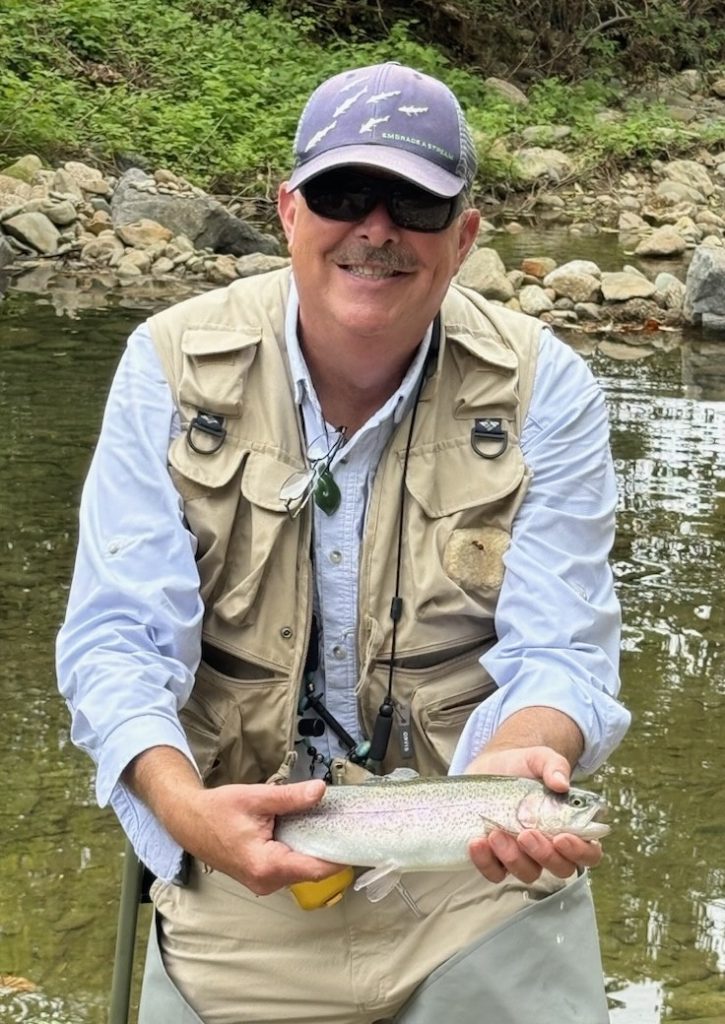
Hurricane Helene was not just a one-off event. It’s part of a larger story of erratic weather patterns. As Edmunds has observed, “we seem to be going through a cycle of very heavy rains, or hurricanes. Lots of flooding, lots of damage, and then, within a very short period of time, you’re back down to no rain. The water levels get very low. The water warms up a lot, which is bad for trout. It’s also potentially bad for the macroinvertebrates that are in the rivers.”
According to Edmunds, the macroinvertebrates “seem to be doing better than the trout this past year.”
“There are two kinds of trout fishing in the Rose River native and stocked. There are several areas where the state stocks it, typically with rainbow trout. And then if you go up into the Shenandoah National Park area, there’s brook trout. The brook trout are native, and they’re always there, but they have been pushed back a bit in certain areas because the rivers are getting smaller, and that makes the water hotter. Both are tough on the native brook trout.”
Normally, the state stocks the streams east of the Blue Ridge where Edmunds fishes. But, according to Edmunds, none of the streams were stocked in Fall 2025 and as of January that was still the case. “The water levels have been too low for them to put fish in. They’re worried that due to the low water the trout will all die.”
Edmunds is hopeful that the macroinvertebrates will start to rebound. “I’m really looking forward to spring, because I expect that in the spring, I’ll see that those scores start to come back up again. My hope is that the leaf litter from this last fall will build up in the river bottom at our test site, settling into the rocks, and giving it time to kind of become part of the bed of the river. And the macroinvertebrates will have a chance to munch on all that stuff and get bigger. And since the stream above is still very healthy, I suspect some of the macros will come down through the stream to the lower areas of the Rose River and populate it over the next year or so.”
Impact of Extreme Precipitation on Stream Ecosystems
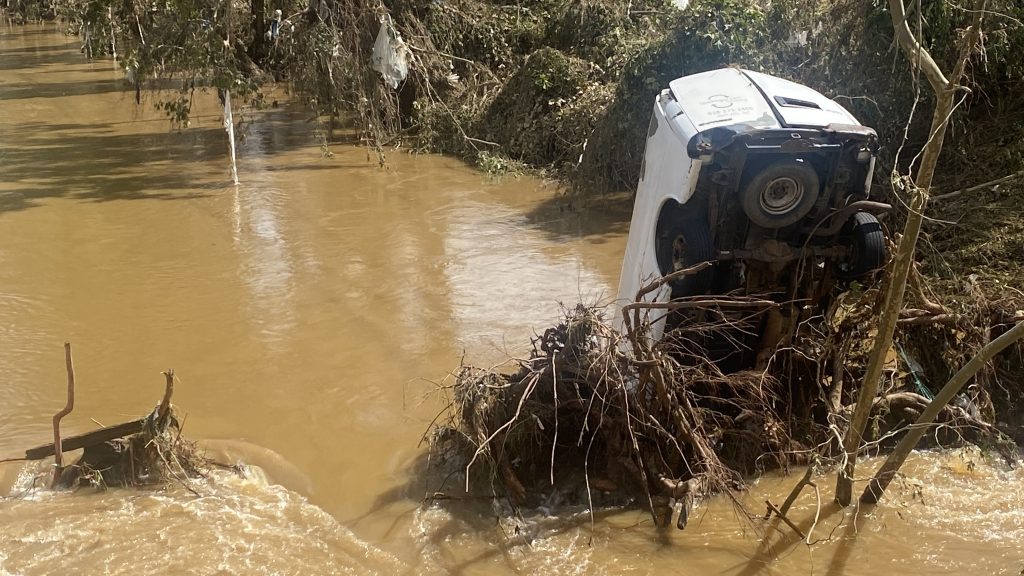
Seasonal flooding is a natural phenomenon that serves an important purpose in the stream ecosystem, providing benefits like nutrient cycling and habitat creation to stream dwelling creatures. In recent years, however, climate change has caused more frequent and intense flooding. Of the top 10 years with greatest number of single-day extreme precipitation events in the U.S., 9 have occurred in the past 30 years. 2025 had the highest number of flash flood warnings ever issued in a single year across the U.S. And it is only expected to get worse—extreme rainfall events are predicted to become three times more likely and up to 20 percent more severe in the next 40 years, according to the National Science Foundation.
Extreme flooding causes a host of problems. In a stream ecosystem, all that excess water over a relatively short period of time can scour the bank, destroy vegetation along the stream, and wash out in-stream habitat. The increased precipitation that is the source of the flood can also carry pollutants from across the watershed into the stream, causing a rapid change in water quality. In the short term, critters that live in the stream, such as fish and macroinvertebrates, can be displaced or killed. In the long term, the reduced habitat complexity that results from the rocks, plants and streambanks being washed out means that the stream can’t support as many species.
These changes particularly affect benthic macroinvertebrates, small creatures that live on the stream bed, since they depend on the stream bed for habitat and food sources. They also have limited mobility, so they may not be able to relocate to a more suitable habitat after a disturbance. Macroinvertebrates serve as an important food source for other aquatic life, so impacts on their populations affect the entire food web.
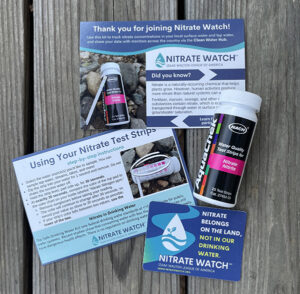 Your kit will include a bottle containing 25 nitrate test strips which you can use to test your water source(s) throughout the year. You’ll also receive postcards explaining how to use your nitrate test strips and how to share your Nitrate Watch results on the Clean Water Hub.
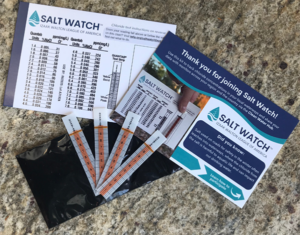 Your kit will include four test strips so you can test your waterway throughout the season. You’ll also receive a chart to help you interpret your results and a postcard with instructions for completing a Salt Watch test and reporting your findings.