A Variety of Programs Attract Kids to Outdoor Traditions
By: Bruce Ingram, Field Editor – Outdoor America magazine, Issue 2 2026
Virginia’s Scott Barrier, who has been a member of the League’s Roanoke Valley Chapter for some 15 years, explains why he became involved with The Mayfly Project.
“I think it’s in the DNA of Ikes to give back… to create a legacy by helping others, especially kids,” he says.
“Many of us have been fortunate to spend time outdoors, and to be able to help create the next generation of conservationists is a joy. My wife Helen feels the same way. She has spent much of her life in the education field, and she too knows the sense of accomplishment in helping young people.”
The Mayfly Project, which began in Arkansas in 2015, uses fly fishing and stream-based activities to mentor young people in foster care ages 8 to 18. The project helps build self-esteem, find healing and—importantly—connect them to local waters and the conservation ethic.
The Barriers, who have a trout stream and two ponds on their Roanoke County land, host local youngsters, giving them first-hand experiences.
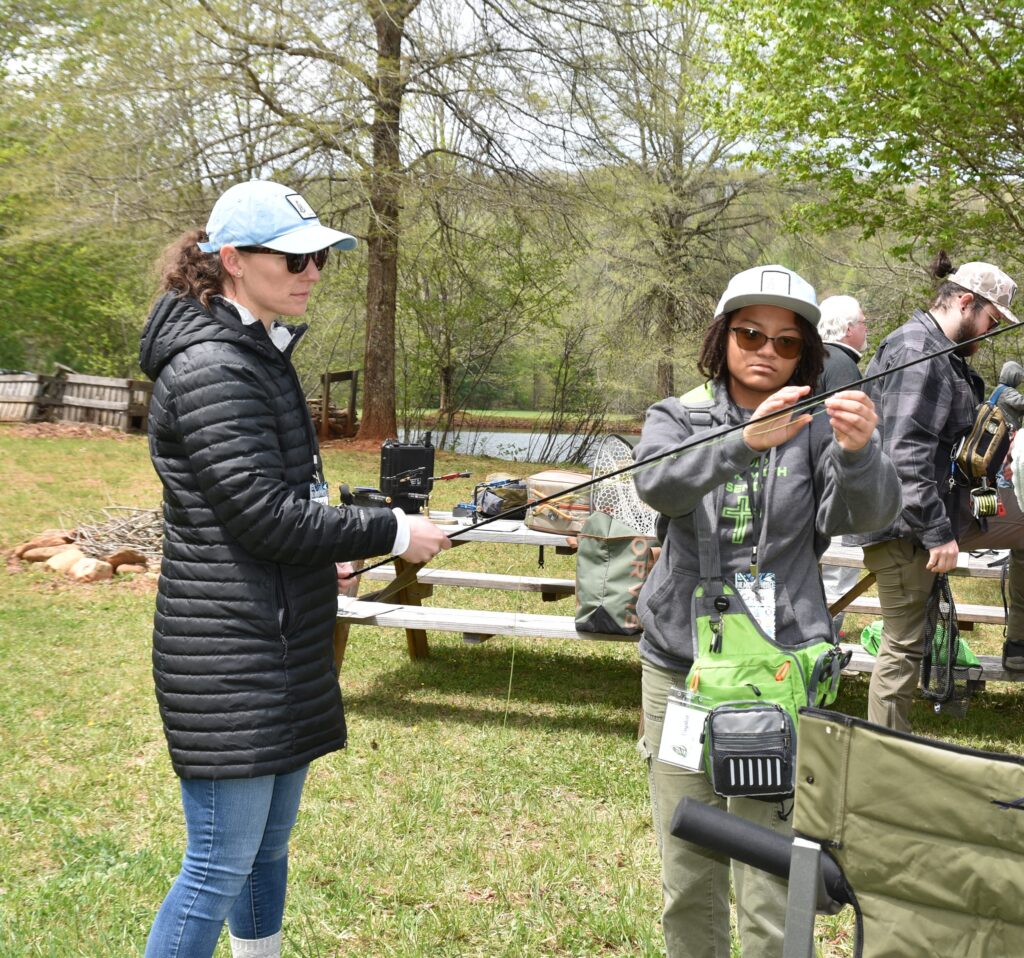
Those experiences include five different sessions that progressively help these young folks learn and build skills. These include introduction to fly rods, reels and line, fly tying, the leave no trace ethic, entomology, what healthy stream should look like, and of course the therapy of being in the outdoors and actually fly fishing.
At every step in these sessions, youngsters have one-on-one mentoring. Part of “graduation” is the kids receiving their own fly rod and gear. Learn more about the Mayfly Project at themayflyproject.com.
Across this country, many other individual Ikes and Izaak Walton League chapters conduct programs that engage youth in outdoor activities, as they have for decades.
Partnerships pay off in Iowa
Greg Oldsen, a member of Iowa’s Emerson Hough Chapter, also works for the Jasper County Conservation Board as a naturalist. “Our chapter and the county have a great partnership,” says Oldsen.
“Jointly, we’ve held public events such as hikes, outdoor-related festivals, tree sales, overnight camping trips and paddling rivers. Several years ago, we came up with the idea of starting a fishing club for kids from third through twelfth grade.
“We soon found that a lot of these kids were not involved in other school activities. And that our fishing outreach became a way for these youngsters to not only learn about conservation and the outdoors, but also to develop relationships and a sense of belonging to something. Paddling a river and catching that first fish was a big deal and resulted in a lot of smiles.”
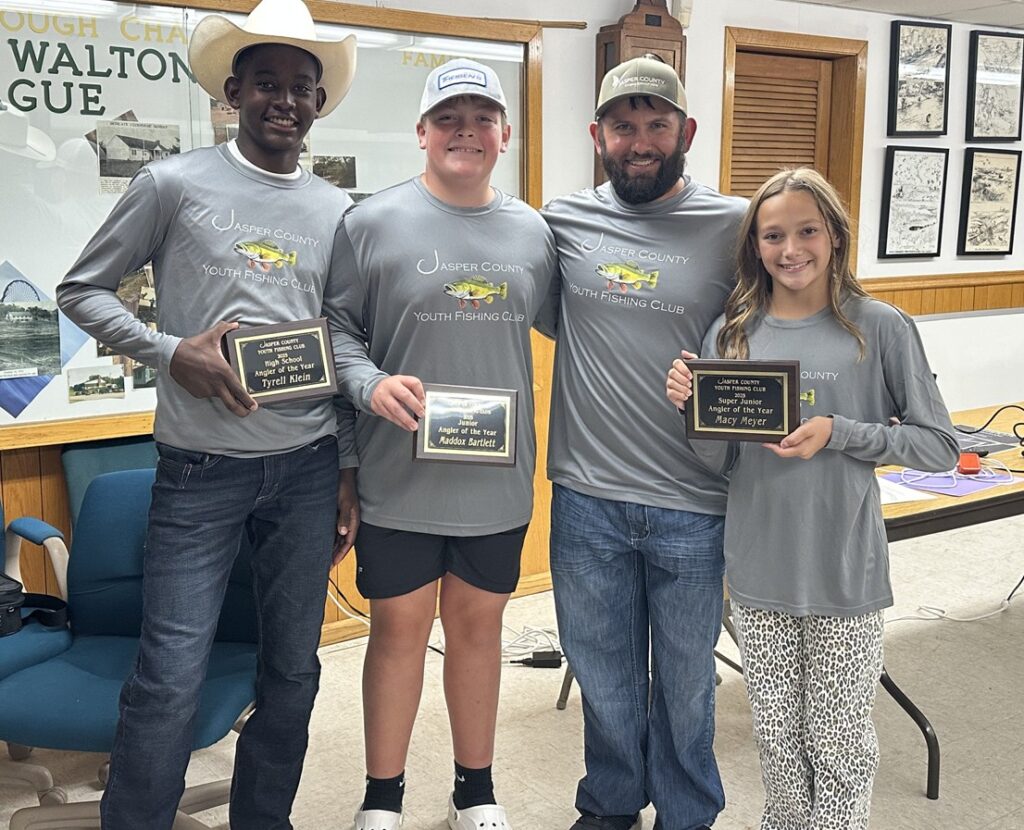
The Chapter’s outreach activities are impressive. Iowa Department of Natural Resources (DNR) fish biologists have come to talk about lake restoration and fish surveys. Fishing club members were later able to go out on shocking boats to net and identify species. They learned how information gleaned from these expeditions is used to shape policies for managing fish populations in Iowa.
Another activity involved lure making. The budding anglers learned how to make bucktails and marabou jigs and custom paint them. During other club meetings, members helped build fish habitat in lakes and ponds. The Chapter’s pond will also benefit from the youngsters’ labor, as future goals involve removing invasive plants throughout the next year and then seeding those areas to stabilize the soil.
Young people naturally enjoy competing, which helps explain why another club activity became regular fishing tournaments.
“We found that the older kids really enjoyed mentoring the younger ones, and the younger ones really looked up to the high school ones,” says Oldsen. “Most of the events are CPR [catch, photo, and release] and the results are submitted through an app on their phones. But we also held cookouts where the kids have a fish fry and learn to clean and cook their catches.”
Fishing links with conservation in Nebraska
Wes Sheets, a national director and member of Nebraska’s Lincoln Chapter, says his organization hosts several fishing outreach events.
Every spring, we have a youth day at our chapter pond where we teach kids how to fish, concentrating on such things as lure choice and fish identification,” he says.
Chapter President Nick Lind adds that youngsters from a wide variety of ages attend this event, usually 20 or so. An activity that mostly attracts young teens involves local fishing experts and chapter members who take 10 to 15 kids to local lakes.
“A major part of being an Ike, of course, involves teaching others about the importance of conservation and clean water in our lakes and streams,” Lind says. “So, we take older teens to local sloughs and test for such things as nitrate.”
The greatest challenge concerning working with youth of any age, emphasizes both Sheets and Lind, is convincing them to return for other activities. The Lincoln Chapter often draws younger individuals by contacting local elementary schools.
A wide range of traditions in West Virginia
Charlie Friddle, shooting sports coordinator for West Virginia’s Mountaineer Chapter, says his Ikes offer three different youth events each year focused on fishing and other outdoor activities. The Chapter partners with the West Virginia DNR, Randolph County Schools and local merchants as well as local youth.
“Of course we have traditional kids’ fishing days where local chapter members assist kids with how to fish, choose and use baits, and how to catch, net and release fish,” Friddle says. “But I think one of the most rewarding events we host annually is partnering with Randolph County Outdoors and the Randolph County Board of Education.” This community partnership aims to bring every third grader in Randolph county to the Chapter for a series of outdoor activities.
“Approximately one-third of the 850 students attend one day of the three-day event. They experience four outdoor related events. The line up varies each year. However, the main theme is archery. The remaining events may be fishing, hiking, fire building, animal track identification, Leave No Trace or aquatic micro-invertebrates identification taught by the DNR.” He says other activities included gun safety and shooting sports.
Sidebar: My day with the Mayfly Project
This past April, I attended a Mayfly Project event in Virginia where volunteer mentors helped foster kids to fly fish on two ponds and a trout stream. There I observed junior mentor Skylar Davis of Floyd County assisting a young person. Just a few years ago, Skylar had been a participant in these events.
“I wanted to give something back…to help kids the way I was helped,” he told me. “My mentor, Adam, was very patient with me every time I would cast a fly up into a tree. My favorite memory is my giving him a ‘trophy’—a tangled mess of line around a piece of wood. Now, I’m helping to teach kids, and I want to do my best for them.”
Another highlight of the fishing instruction, which caused the kids to laugh, had two adults pretending to be an angler and a trout the former had hooked. The “human” trout ran and leaped around a field while the other volunteer explained how to land and then safely release a fish.
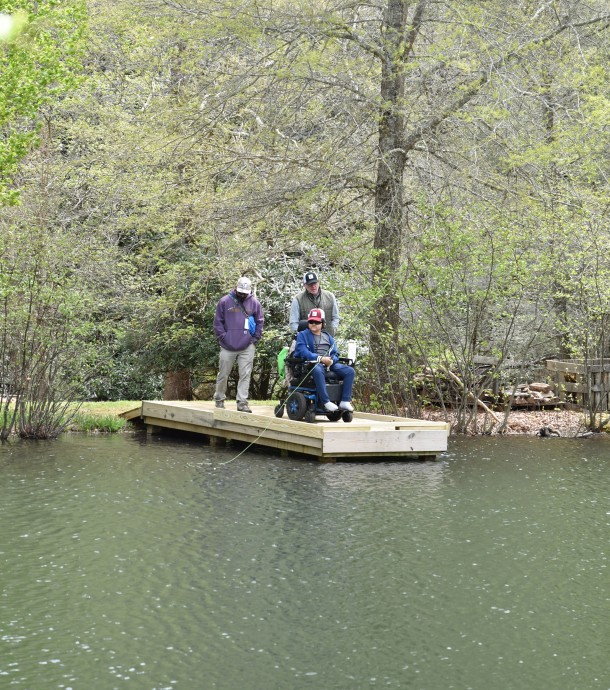
The air temperature had plummeted more than 45 degrees from the day before, which, expectedly, resulted in poor angling with no fish caught. But one youngster, a wheelchair user, managed to hook and battle three huge trout, each one eventually leaping and expelling the fly. The beginner’s casting noticeably improved during the afternoon, and he remained engaged in trying to finally land a trout…. I’m confident he will at the next Mayfly event. — Bruce Ingram
Mayfly Project Events
Some of these innovative Mayfly Project strategies and their five-meeting approach might be useful to try at Izaak Walton League chapters.
- Egg phase: sport of fly fishing, fly rod parts, casting, knots, safety, fly tying Griffiths knot
- Nymph phase: fly line, knots, casting styles, safety, conservation, setting hook
- Emerger phase: reading waters, fly patterns, safety, conservation
- Dun phase: reading different waters, invasive species, different flies, safety, conservation and entomology.
- Fish on! phase: receive their own gear & final fly fishing adventure.
Lifetime Ike member Bruce Ingram is the author of some 3,000 magazine and web articles and 11 books. His most recent is the second edition of Living the Locavore Lifestyle about living off the land by hunting, fishing and gathering. bruceingramoutdoors@gmail.com.
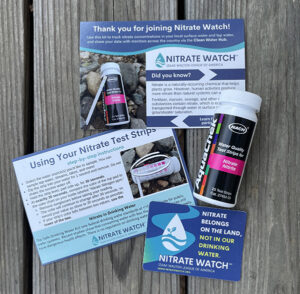 Your kit will include a bottle containing 25 nitrate test strips which you can use to test your water source(s) throughout the year. You’ll also receive postcards explaining how to use your nitrate test strips and how to share your Nitrate Watch results on the Clean Water Hub.
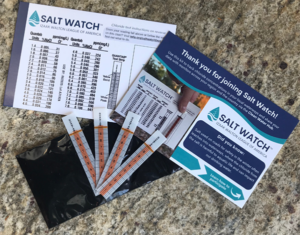 Your kit will include four test strips so you can test your waterway throughout the season. You’ll also receive a chart to help you interpret your results and a postcard with instructions for completing a Salt Watch test and reporting your findings.