Forever Chemicals: How PFAS Are Poisoning Waterfowl as Well as Humans (and What We Can Do about It)
Outdoor America, Issue 2, 2026
By: Lisa Ballard
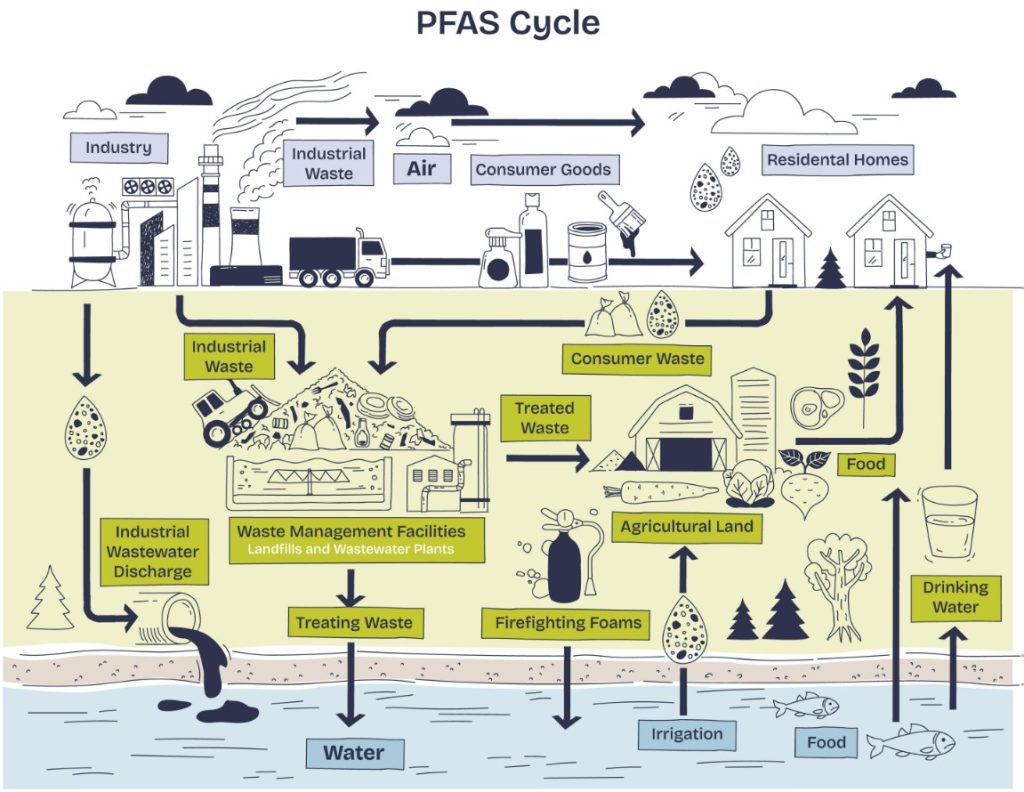
Forever chemicals are a category of over 15,000 manmade compounds, primarily per- and polyfluoroalkyl substances, or simply PFAS. They are “forever” because their carbon-fluorine molecular bonds are so stable and strong that they don’t breakdown in the environment, at least not for a thousand years.
What’s more, they are everywhere—in our water, soil, homes, clothing, bodies, the deer eating your petunias and the mallard in your freezer that you shot last fall. In other words, forever chemicals are also “everywhere chemicals.”
Your body absorbs PFAS from everyday items like nonstick pans, food packaging and your favorite Gore-Tex jacket. Sitting on your living room couch and walking across your carpeted floor also exposes you to PFAS thanks to their stain-resistant coatings.
What makes PFAS so useful in everyday products—their durability and resistance to heat, oil and water—also prevents them from breaking down.
We’ve been using PFAS in everyday products for over 80 years, which have worked their way into the environment in myriad ways, including manufacturing processes, what we surround ourselves with and use in our everyday lives and what we throw away. When we drink water, eat vegetables grown in exposed soil or breathe PFAS-contaminated air, our bodies retain that PFAS load. Likewise, if we ingest a bird or animal—self-harvested or purchased at a grocery store—their PFAS accumulate inside us.
We already know that forever chemicals in humans can lead to developmental delays in children, kidney and testicular cancers, infertility, elevated cholesterol levels, reduced liver and immune system function and thyroid disease. However, we are just scratching the surface of how PFAS affect wildlife. While scientists began tracking the effects of forever chemicals in fish in the early 2000s, it’s only within the last few years that studies have begun to look at the impacts of PFAS on other wildlife, including the species we hunt.
The best way to deal with these threats? Reduce exposure and look for solutions.
Eating advisories in Wisconsin
Most hunters believe that meat harvested from the natural landscape, like waterfowl, is the epitome of a free-range, 100 percent organic, zero-growth-hormone source of protein. But perhaps those ducks in your freezer are not so healthy after all. It depends on where the ducks have lived.
For example, Lower Green Bay on Lake Michigan has had a waterfowl consumption advisory since the mid-1980s when the EPA designated it as an area of concern. For many years, the EPA suggested limiting wild duck to one meal per week. That recently changed. For 2026, the advisory is “do not eat” for mallards in Lower Green Bay, and a limit of one meal per month for mallards and one meal per week for wood ducks in the broader Green Bay area.
“In 2022, we started looking more closely at PFAS in waterfowl, because we knew that they could bio-accumulate,” says Sean Strom, Fish and Wildlife Toxicologist with the Wisconsin Department of Natural Resources. “Levels were unexpectedly high, so we did two more years of sampling in 2023 and 2024. Then we needed to figure out what the data meant. We also involved the Wisconsin Health Services Department, which revised the advisory. It became more restrictive.”
For their research, Strom and his colleagues intentionally collected duck samples in late July and early August, prior to the main migratory season on the Mississippi flyway. “We wanted to have confidence that the ducks, primarily mallards but also some wood ducks, had been in the area for at least four to five months, so we could confirm contamination was from a local source,” he explains. “But we don’t know what that source is.”
Then, during the 2025 waterfowl hunting season, Strom’s team looked at hunter-donated ducks to see if there was a difference between local and migratory ones. The migratory ducks also contained high levels of PFAS.
“We don’t know yet what the health effects of PFAS on waterfowl are,” says Strom. “They are not acutely toxic, like mercury, meaning if a bird is exposed to it, it dies. It’s still an area of active research. For birds in general, it might affect their immune or reproductive systems or their nesting habits, but the level of PFAS [dangerous to] a bird is up for debate. PFAS are not killing ducks, but they’re not healthy. This is such a new and rapidly evolving area of research.”
Problems in Eastern states
A landmark study of waterfowl in the Northeast, “Environmental contaminants assessment for frequently harvested migratory waterfowl in the Northeast Atlantic flyway.” was published in Science of the Total Environment in January 2025. This study revealed that waterfowl are being exposed to forever chemicals across broad geographic areas.
The study was a collaboration among Cornell University and the New York State Department of Environmental Conservation, New York Department of Health, Pennsylvania Game Commission, Connecticut Department of Energy and Environmental Protection, New Jersey Fish and Wildlife and the University of Pennsylvania.
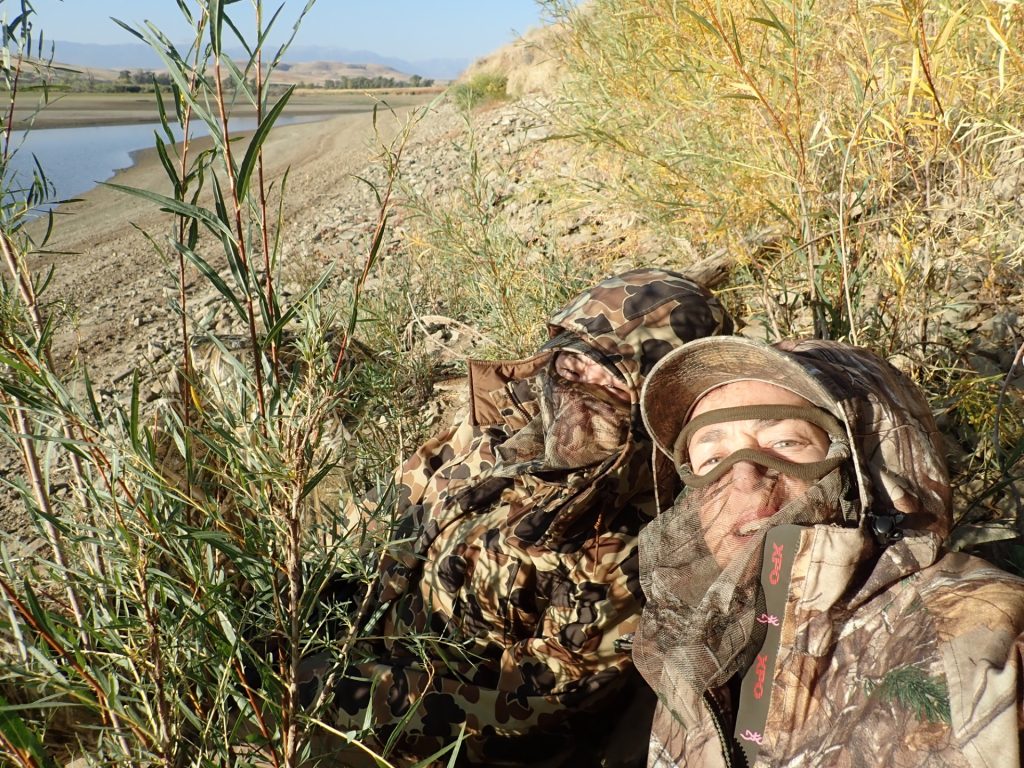
The study looked at the breast meat in five of the most common waterfowl harvested by hunters in those states—mallards, black ducks, green-winged teal, wood ducks and Canada geese. It encompassed nine ecological regions. Of the 108 birds sampled, all contained PFAS.
Interestingly, wood ducks and Canada geese contained lower levels of PFAS than the other species, likely due to differences in what they were eating.
“We wanted a large geographic spread so we could better update what we know about these contaminants,” says Krysten Schuler, Associate Research Professor of Public and Ecosystem Health at Cornell’s College of Veterinary Medicine and a senior author of the study.
“The study was unique due its random [sampling] of birds,” she continues. “Also, we looked at adult birds, and if they were migratory, how long they had been on a lake—several weeks or a day. It was a challenge. We want to learn what constitutes a toxic dose, and of the hundreds of [PFAS] compounds we found, do they interact? Yes, but we don’t know what it means. We couldn’t find data on other animals, even cows or chickens, to compare with, but we know the compounds are out there.“
The study has also revealed the need for additional research to fully understand the impacts of PFAS on waterfowl populations and those of us who love wild duck on our dinner tables. The specific guidance for consumption by humans is still a work in progress.
In the four states in the study, hunters annually harvest about 500,000 waterfowl. The Cornell collaboration aimed to update guidelines for human consumption of waterfowl, which had not changed in New York State since the 1990s. The health departments in the other three states will also use the information for their guidance.
A warning for waterfowl conservation
From a conservation point of view, the fact that PFAS are widespread among waterfowl is a warning.
“When wildlife have more space, their resilience to contaminants and their population stability increases, but we’re squishing waterfowl into smaller and smaller spaces as the amount of natural wetlands on the landscape decreases,” says Schuler.
That means waterfowl have been forced to use suboptimal habitat, like drainage ponds or a golf course. “They would rather be in a swamp,” Schuler says. “We need people to understand what’s happening, and if they see a bird that doesn’t seem right, to report it to their state wildlife agency. The problem is, people are removed from nature.”
To Jared Mott, long-time duck hunter and executive director of the Izaak Walton League, preserving waterfowl habitat is a personal as well as a professional priority.
“Of course, the Izaak Walton League has been working to preserve wetlands and waterfowl habitat since 1922,” he says. “Whether the Upper Mississippi River bottomlands, prairie potholes across the Midwest or vast acreage of vital wetlands deliberately excluded from Clean Water Act protection after the Sackett v EPA decision, the League will continue to work to preserve these places and the outdoor traditions connected to them.”
Can we get rid of PFAS?
Strom is quick to point out that waterfowl hunters need to be aware of how much duck meat they are consuming. Eating advisories are only as protective as the data on hand, which is changing based on ongoing research.
He says the research has focused more on fish in the past. “Fifteen years ago, when PFAS levels in water were at 40 parts per billion, there was no advisory. Now, it’s ‘do not eat!’” He says if we reduce PFAS by turning off that contamination “spigot,” fish respond quickly. “We’re not sure about other critters yet. Also, waterfowl and other wildlife are not all at the same spigot. We can’t turn it off if the source isn’t known.”
In the meantime, Strom suggests that waterfowl hunters be aware of where they are hunting and whether a PFAS advisory is in effect.
For Schuler, whose work focuses on wildlife populations across broad geographic regions, she is happy that data collection on Lake Erie and Lake Ontario is now under way. “The problem can seem so big. But individual efforts matter,” she says. “We were able to decrease mercury in the environment, so we can do the same for PFAS, but first, we need to decrease our social appetite for them.”
12 Ways You Can Lower PFAS in Your Body and Environment
- If you hunt ducks this fall, check whether a consumption warning is in place and follow it.
- Limit your use of items labeled “water-resistant,” “waterproof,” “grease-proof,” “non-stick,” “oil-repellent” and “stain-resistant.”
- Opt for food packaging that is uncoated whenever possible.
- Avoid health and beauty aids, including make-up, lotions, cleansers and dental floss that are waterproof, smudge-proof, long-lasting or better gliding.
- Wait as long as possible before painting your house, and using sealants, floor waxes and other cleaning products.
- If you install artificial turf, opt for a PFAS-free variety.
- Cook with cast iron, stainless steel or ceramic pots and pans.
- Install an activated carbon or reverse osmosis water filter in your home to remove PFAS from your tap water. Use similarly filtered water in your vegetable garden and for pets and livestock.
- Avoid any products that contain “fluoro” or perfluoro” in their names or ingredients.
- Select weatherproof apparel that is PFAS-free, e.g., jackets with wax, silicone or plant-based water-repellent coatings.
- Vacuum your home frequently using a vacuum with a HEPA filter. PFAS accumulate in dust.
- Store leftovers in reusable, PFAS-free food containers. Use them in restaurants, too, rather than standard (coated) “doggy bags.”
Getting Rid of PFAS
Forever chemicals might have a shorter lifespan in our water and soil if scientists get their way. It’s a huge, expensive challenge to break apart the extremely stable, strong bonds between fluorine and carbon, the main elements in PFAS molecules, but here’s where hope lies:
- Binding PFAS in place with added sorbents, like granulated activated carbon and certain resins and clays. The quest is on to find something that binds to fluorine more quickly than carbon, thus speeding up the time it takes for a sorbent to work.
- Creating man-made “floating wetlands,” vegetation platforms on stormwater ponds, lakes and rivers that have hydroponic roots to absorb contaminants, including PFAS, directly from the water column.
- Implementing “pyrolysis” (high heat without oxygen) and other heat processes that break apart the molecular bonds of PFAS.
- Finding bacteria and other microbes that break down carbon-fluorine bonds in soil.
- Harnessing light to create a photocatalyst that breakdowns carbon-fluorine bonds.
- Blasting apart PFAS molecules via a process called “radiolysis,” which uses either high-energy electron beams or a plasma treatment (ionized gases).
Lisa Ballard is an Ike and waterfowl hunter from Red Lodge, Montana. As one of the top-ranked masters ski racers in the world, she embraces a rule outlawing the use of fluorinated waxes on skis as another way to reduce PFAS in the environment. LisaBallardOutdoors.com.

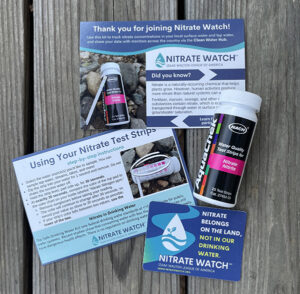 Your kit will include a bottle containing 25 nitrate test strips which you can use to test your water source(s) throughout the year. You’ll also receive postcards explaining how to use your nitrate test strips and how to share your Nitrate Watch results on the Clean Water Hub.
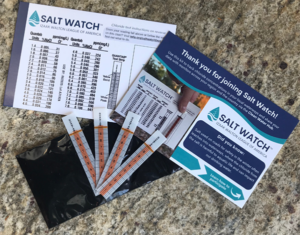 Your kit will include four test strips so you can test your waterway throughout the season. You’ll also receive a chart to help you interpret your results and a postcard with instructions for completing a Salt Watch test and reporting your findings.