Rollback of Conservation Laws Calls for Restoration of Protections and Reimaging How We Steward Outdoor America
Author: Michael Reinemer, Editor
Outdoor America 2026, Issue 3
All of us who care about clean drinking water, thriving wild landscapes and a healthy planet have our hands full. The Trump administration rollbacks to the nation’s bedrock conservation policies and laws are broad, deep and without precedent in American history.
Many of these essential environment policies have been shaped and supported by the Izaak Walton League over the past 104 years and are reflected in the League’s conservation policies, determined by a bottom-up resolution process. (The League’s most recent resolutions were approved by delegates in July at the 2026 convention in Bloomington, Minnesota—see page 18).
The League created the template for modern advocacy with its successful campaign to preserve a vast swath of wetlands in the Upper Mississippi River National Wildlife and Fish Refuge in 1924. Over that time, the U.S. has seen a natural push and pull over conservation priorities. For the most part, however, lawmakers have maintained conservation of natural resources as a national priority.
Given their scope and depth, the latest rollbacks are different. Char Miller, who teaches environmental history at Pomona College, describes them as an “unprecedented, deliberate and brutal assault on more than a century of environmental initiatives.” Particularly harmful is the damage caused by layoffs, funding cuts and chaos visited upon the staff at federal agencies that manage outdoor America—the U.S. Forest Service, the National Park Service, the Fish and Wildlife Service and U.S. Geological Survey, among others.
As a result, Miller told me, Congress and the administration have “destroyed generations of congressionally mandated guardrails and judicially confirmed legal rules.”
Starving programs and agencies of funding— like the federal cuts to science funding— represents career setbacks or endings for many staff who have spent their lives managing the nation’s natural resources for the benefit of the American people. (See Miller’s history of the landmark court case, West Virginia Division of the Izaak Walton League v. Butz on page 30.)
A full description of the rollbacks so far during this administration would be lengthy. Here are just a few examples.
Repealing the Endangerment Finding

In February, the Trump administration repealed the 2009 Endangerment Finding, in which the EPA Administrator found that emissions from motor vehicles “contribute to the greenhouse gas pollution that threatens public health and welfare.” The Finding provided the scientific rationale for regulating greenhouse gases, initially from cars and trucks and also emissions from power plants and oil and gas facilities. The Trump administration called the repeal “the single largest deregulatory action in American history.”
ProPublica, the investigative news organization, reports that the White House also set up an email inbox so polluting facilities like coal-fired power plants could request two-year exemptions from the Clean Air Act. No applications or review by the EPA were required and at least 180 facilities were given exemptions via presidential proclamation.
These actions reject the goals of mitigating, reducing or even recognizing the threat of climate change, even in this year of climate-related disasters around the world.
Undermining NEPA, Bill of Rights for the environment
The National Environmental Policy Act (NEPA) requires all federal agencies to evaluate the environmental impact of certain federal actions by assessing their environmental impact. The law also requires consideration of potential alternatives to the proposed action. This affects permitting for infrastructure, energy development, forest management and other projects. Signed into law by President Nixon in 1970, NEPA also requires the government to invite the public to review and comment on proposed actions.
On January 6, 2026, the Council on Environmental Quality (CEQ), which is part of the executive branch, published a final rule that rescinded all CEQ regulations implementing NEPA. And on February 24, the Department of Interior published a final rule that rescinds more than 80 percent of that agency’s prior NEPA regulations. One result of the changes is that the cumulative effects of greenhouse gases and climate change will not be considered as a potential environmental impact. Stopping short of killing the law, these recent changes seek to reduce NEPA to a toothless, optional process.
The NEPA reviews—according to critics—causes costly delays. But the process is designed to ensure transparency, consider alternatives and prevent potential environmental harms that could far outweigh the costs of the NEPA process. And in the U.S. we’re not good at calculating a complete and accurate dollar value for healthy woods, waters and wildlife.
The full impact
Other areas affected by the administration’s rollbacks include the Endangered Species Act, PFAS safeguards for drinking water, the Roadless Rule, the size of existing national monuments, the Bureau of Land Management Public Lands Rule and the downsizing and politicization of federal agencies.
I reached out to law professor and historian John Leshy to put the rollbacks in perspective. Focusing on the scale of the attacks on public lands, he agreed “there is no precedent in U.S. history.” He cited opening up tens of millions of acres of public land to drilling, mining and logging as some of the most egregious setbacks. Leshy is emeritus professor at the University of California and author of the book “Our Common Ground: A History of America’s Public Lands.”
Most alarming, he said, was “hollowing out the National Park Service, Forest Service, Bureau of Land Management and Fish and Wildlife Service, who manage these lands, by slashing their budgets and staff and expertise, done with the aim of making management so bad as to undermine public support for keeping these lands in national ownership.”
He said this deliberate unraveling of regulations, laws and budgets will not easily be reversed by a different administration or in the courts.
“It’s not like a light switch you can turn back on. It is therefore more imperative than ever for people who care about our public lands to make their voices heard and engage in the political process that ultimately will determine how much and how well we will safeguard these national treasures for future generations.”
The objective of the rollbacks, Leshy says, is to undermine confidence in the management of our shared federal lands to the point where the public concludes these treasures would be better off if they were sold to private interests or given to the states.
Toward a more enduring consensus
While certain states, like Texas, have embraced some of the Trump rollbacks, other states are taking steps to ensure that environmental safeguards remain in place. Some executive branch actions will be stalled in courts.
Meanwhile, polls like the Colorado College voter survey find that support for protecting public lands is steady or even growing across the political spectrum. And some issues, like the lack of transparency around the rapid spread of data centers, are now attracting bipartisan ire.
In any case, the environmental rollbacks will require years to repair and return to a path toward clean water, climate mitigation, smarter energy and better land and wildlife conservation. Restoring common sense may require new strategies, channels and partnerships to reach a more enduring consensus about our broadly shared goal—a healthy outdoor America for future generations.
Learn how to help at iwla.org
Visit the Conservation Priories and Get Involved pages on the Izaak Walton League website to learn about what you can do.
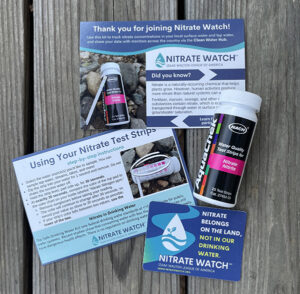 Your kit will include a bottle containing 25 nitrate test strips which you can use to test your water source(s) throughout the year. You’ll also receive postcards explaining how to use your nitrate test strips and how to share your Nitrate Watch results on the Clean Water Hub.
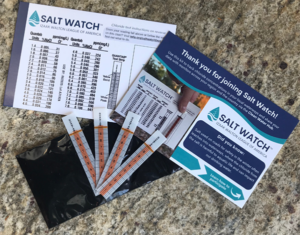 Your kit will include four test strips so you can test your waterway throughout the season. You’ll also receive a chart to help you interpret your results and a postcard with instructions for completing a Salt Watch test and reporting your findings.