Meet a Monitor: Paityn and Mackenzie
By: Abby Hileman, Salt Watch Coordinator
The Izaak Walton League of America has been working to conserve habitats for future generations since 1922. Over a century later, a new generation of conservationists is stepping up to lead the way.
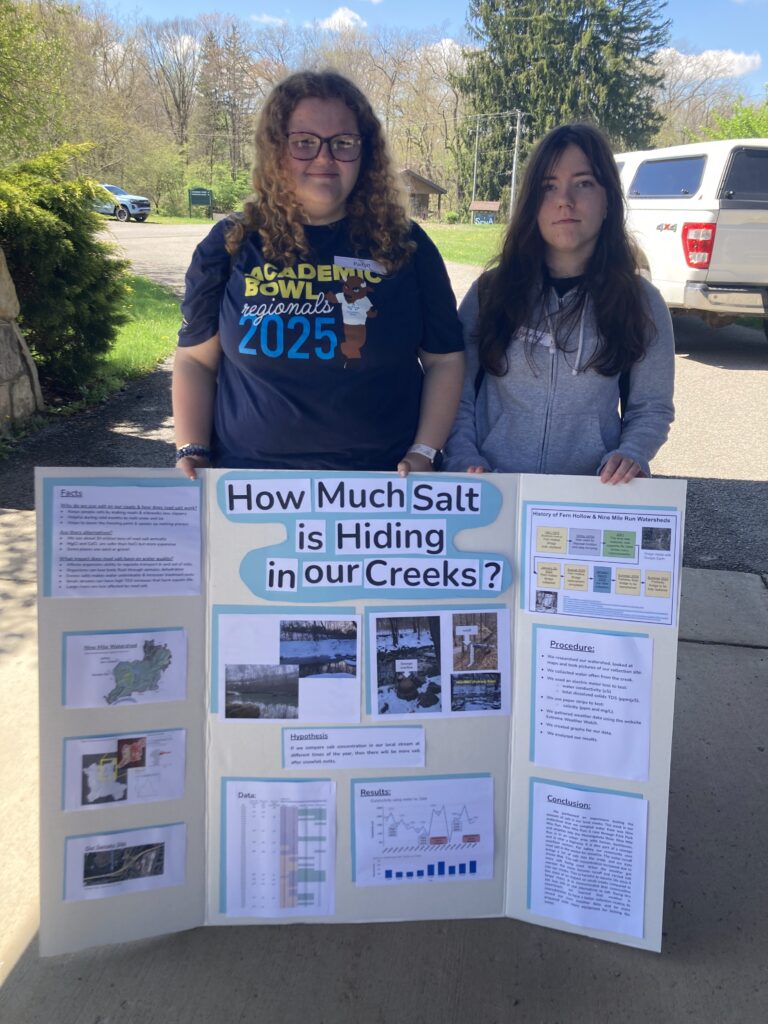
This month, we are excited to introduce two inspiring high school students from the Western Pennsylvania School for the Deaf: Paityn and Mackenzie. As rising seniors, this past school year they took their passion for nature out of the classroom and straight into their local watershed. In collaboration with Creek Connections (a Salt Watch Partner) through Allegheny College, Paityn and Mackenzie were able to monitor a local stream in the community for road salt runoff pollution and other contaminants this past winter.
Using the League’s Salt Watch program, Paityn and Mackenzie spent their winter tracking a pollutant that is often completely invisible: road salt. They recently shared their findings at the regional Creek Connection Symposium at Allegheny College in Meadville, Pennsylvania. We sat down with them to talk about their data, their love for nature, and what they learned along the way.
From High School Classroom to the Banks of a Local Stream
For Paityn and Mackenzie, the environment is personal. Both students share a deep appreciation for the outdoors, though they connect with it in different ways. Mackenzie finds her peace while hiking through western Pennsylvania’s trails. Paityn, on the other hand, writes poetry outside, finding that her best ideas come to her when she is sitting quietly in the woods. Driven by a desire to solve environmental problems, the two students teamed up for a winter water monitoring study.
Their testing site sat right in the valley of the Nine Mile Run Watershed, a historic urban waterway located in the East End of Pittsburgh, Pennsylvania. Positioned adjacent to the busy parkway, the site was perfect for monitoring the streams passing under high-traffic bridges that have recently undergone, or are actively undergoing, significant construction. This monitoring location captures a unique intersection of environmental history and modern urban stress. For decades, the watershed was heavily polluted by industrial steel waste. However, it achieved national fame in 2006 when the U.S. Army Corps of Engineers completed what was, at the time, the largest urban stream ecosystem restoration in the United States.
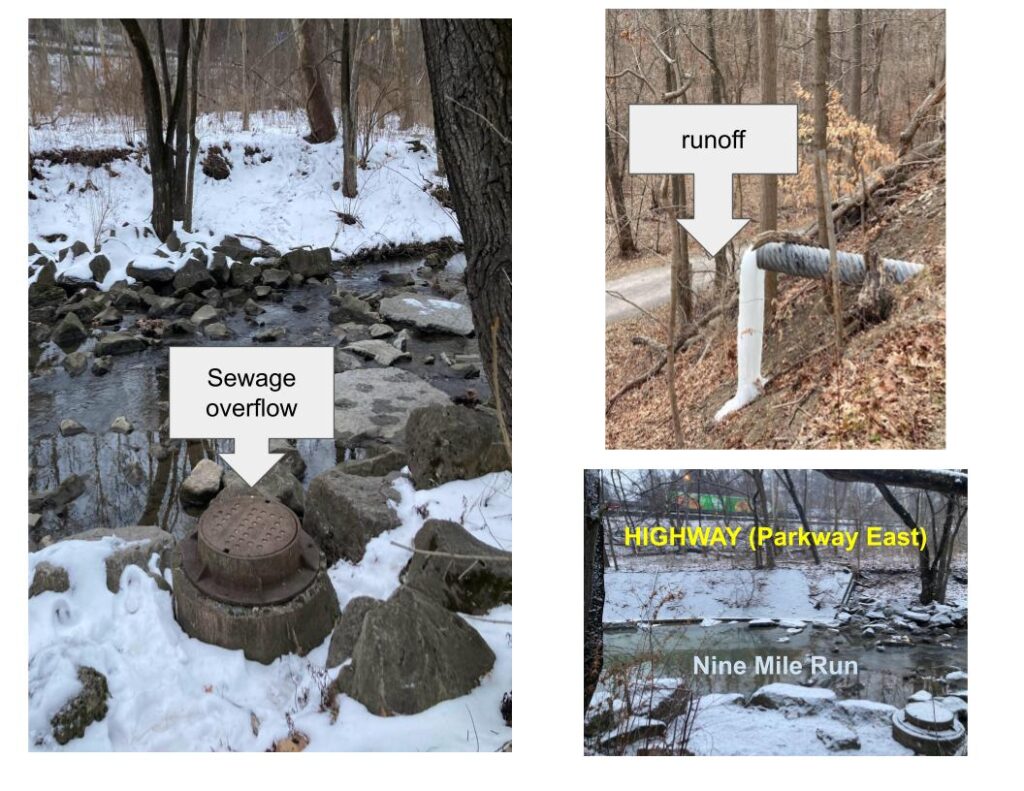
Today, the Nine Mile Run Watershed is actively managed by Upstream Pittsburgh, but it still faces intense infrastructure challenges. As a highly urbanized watershed, it is constantly impacted by excessive stormwater runoff and combined sewer overflows. Oversight and coordination of the watershed is also both complex and challenging, as the watershed extends across multiple municipalities. Furthermore, because Pittsburgh is famous for its steep hills, local roads are often heavily salted during the winter to keep drivers and pedestrians safe. This necessary safety measure creates an additional environmental hurdle, causing massive amounts of salt to run off into the nearby streams and alter the very water quality being tested by the students.
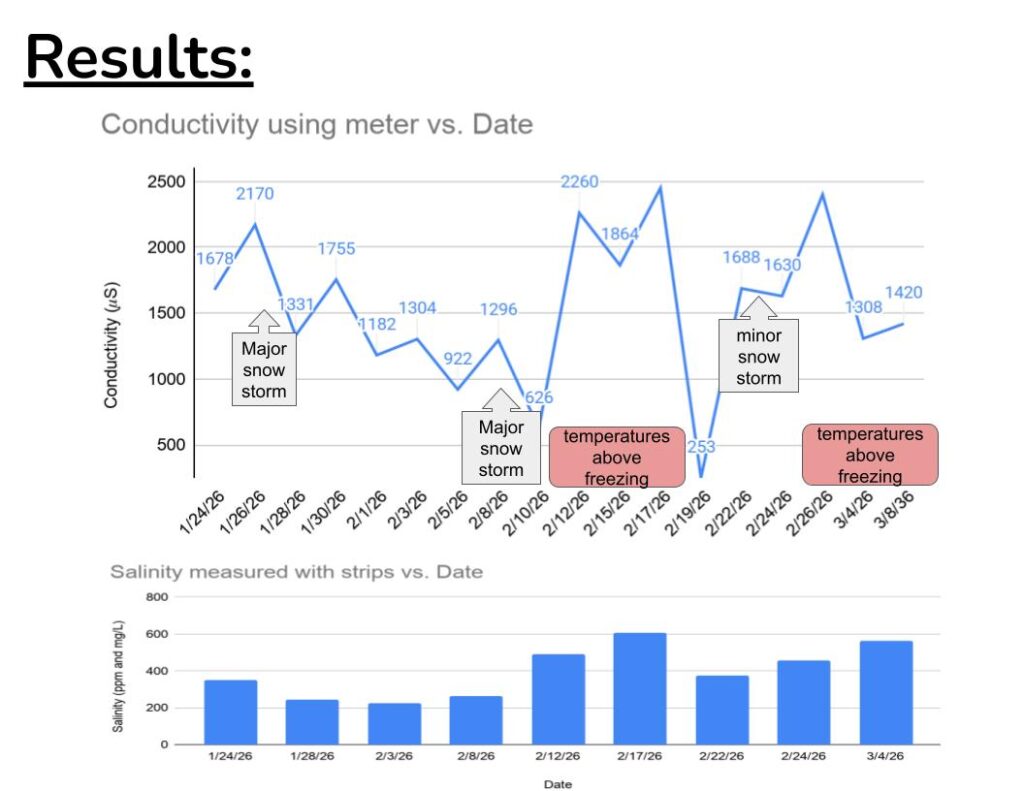
Throughout January, Paityn and Mackenzie’s teacher, Julie Ann Mountain, collected water samples every two to three days for testing. Back in the classroom, Paityn and Mackenzie performed chemical testing using Salt Watch test strips. Because salt and other contaminants dissolve completely and cannot be seen with the naked eye, the chemistry felt abstract at first since the water didn’t look polluted. However, as the weeks went on, the data began to tell a different story. As Julie Ann Mountain noted, “While students understood runoff in the abstract, visiting our site and analyzing collected data allowed them to truly see how impactful our topography and the accumulation of salt (as well as sediments and other pollutants) can be.”
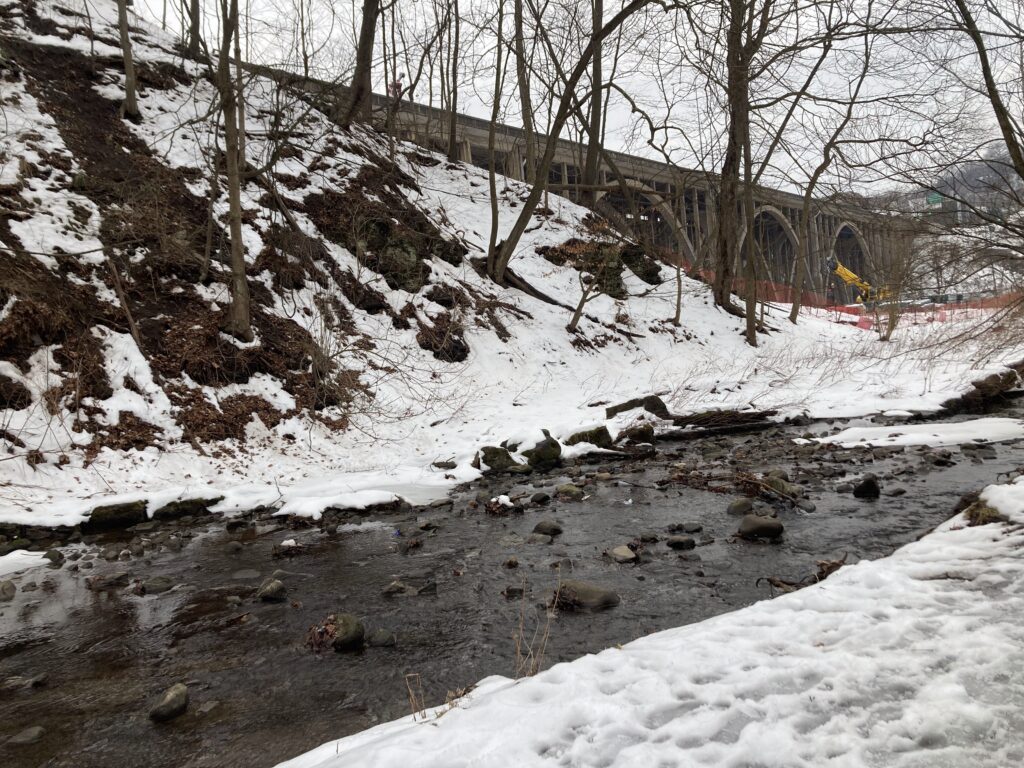
The winter brought a harsh, extended deep freeze, which trapped the road salt in place within the ice and snow. During this cold stretch, the creek’s salt levels plateaued. But once the weather finally warmed up and the snow began to melt, the students caught the exact moment a massive spike of salty runoff flushed directly from the local roadways into the creek.
Testing the water and witnessing that chemical spike firsthand was shocking. It bridged the gap between seeing salting practices on the road and sidewalks and understanding the hidden chemical consequences within the water.
Spreading Awareness and Inspiring Future Leaders
The students quickly realized that salt pollution has a massive cascading effect. Mackenzie explained that excessive salt can dehydrate wildlife that rely on healthy freshwater streams. Paityn pointed out that the danger extends to humans, too, since many communities pull their drinking water directly from local streams and salt isn’t often removed by water utilities due to expense and lack of infrastructure.
To combat a lack of public awareness, Paityn and Mackenzie decided to share their data at the Creek Connections Symposium at Allegheny College in Meadville, PA. For the Symposium, they built a large project display board and later placed it outside of their high school classroom to share with their peers. They also brought the data home to discuss with parents and friends.
A Snowball Effect of Local Environmental Knowledge
Many people were genuinely surprised to learn that road salt acts as a persistent environmental pollutant. Even Mackenzie and Paityn, who expected to see high levels of salt in the water, were still surprised at the results from their testing. For Paityn, this outreach is the best part of community science. She described it as a “snowball effect” of knowledge—learning something meaningful, teaching someone else, and watching the community’s environmental awareness grow.
When asked what advice they would give to other students considering water monitoring, both students emphasized passion and enjoyment. Paityn urged future monitors to stay on top of their data, gather the necessary equipment, and put their whole heart into the work. Mackenzie echoed the sentiment, noting that above all else, the most important thing is simply to have fun while making a difference.
Why This Work Matters
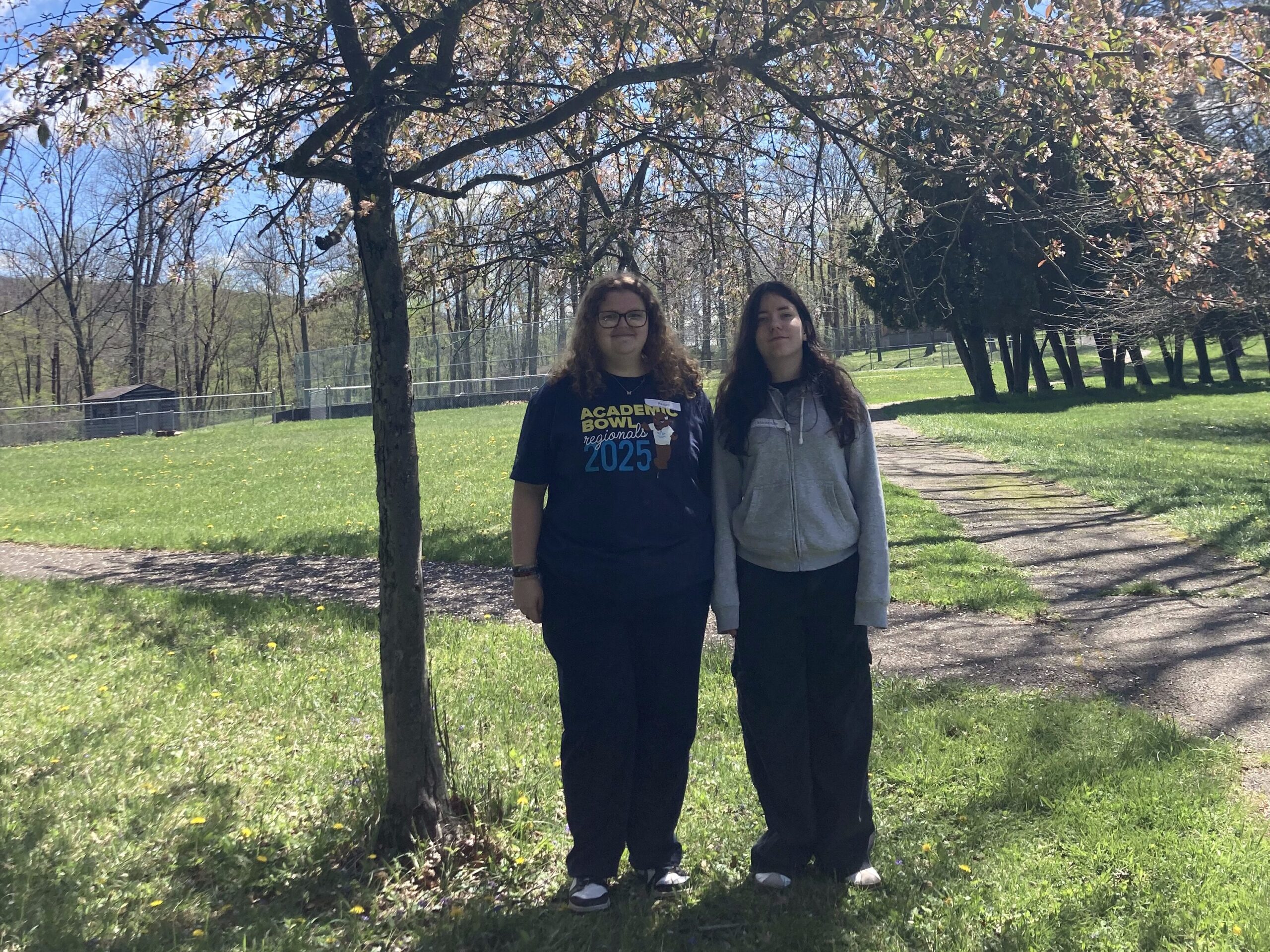
Paityn and Mackenzie’s winter project highlights exactly why community science is so critical. Road salt dissolves completely into water, making it a hidden threat to our ecosystems and drinking water infrastructure. Because local water utilities cannot easily filter salt out of our water, monitoring local streams gives us the vital data we need to advocate for smarter salting practices.
As their science teacher noted, complex environmental issues don’t have a simple, single fix. It takes local partnerships—and dedicated volunteers like Paityn and Mackenzie—to look at the bigger picture and protect our shared waters.
“When you go out and actually do the monitoring, you are becoming a leader. You become a person who is actively contributing to the world rather than just receiving.”
Julie Ann Mountain, Paityn and Mackenzie’s teacher.
Author’s Note: Water monitoring like Salt Watch isn’t just for scientists or environmental professionals—it is for everyone. Whether you are an individual, a family, or part of a Scout troop or school group, you can participate regardless of your age or experience. By joining this community science movement, you can help build awareness, encourage community involvement, and empower more people to take an active role in protecting your local waterways.
Are you ready to monitor a stream in your neighborhood? Head over to the Salt Watch page to request your free test kit and join our nationwide community of water monitors!
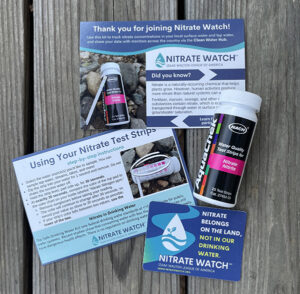 Your kit will include a bottle containing 25 nitrate test strips which you can use to test your water source(s) throughout the year. You’ll also receive postcards explaining how to use your nitrate test strips and how to share your Nitrate Watch results on the Clean Water Hub.
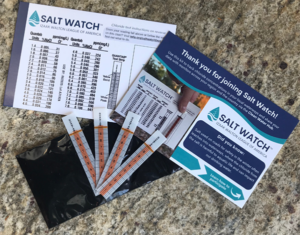 Your kit will include four test strips so you can test your waterway throughout the season. You’ll also receive a chart to help you interpret your results and a postcard with instructions for completing a Salt Watch test and reporting your findings.