Meet a Monitor: Butch Morris
By: Maggie Dombroski, Mid-Atlantic Save Our Streams Coordinator
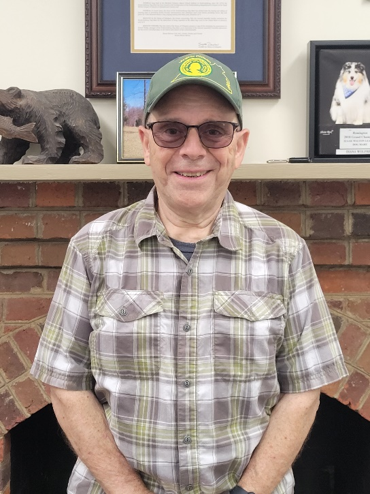
Butch Morris, a member of the Fredericksburg-Rappahannock Chapter of the Izaak Walton League, has been monitoring macroinvertebrates with Virginia Save Our Streams (VA SOS) since before the program even carried that name. His journey began in 1975, when he was teaching 5th and 6th graders in Southwest Virginia and searching for ways to spark genuine excitement about science. He knew that hands-on, outdoor learning was the key. So, when the state offered a program that trained teachers in biological and chemical stream monitoring, he jumped at the opportunity.
He found that stream monitoring was an invaluable experience for his students. At one level, it provided a hands-on opportunity to “use the streams to talk about a lot of science things” – everything from dissolved oxygen, to metamorphosis, to how the tannins in falling leaves impact the stream. On another level, discovering strange and fascinating aquatic insects—creatures they never knew existed—opened the students’ minds. Butch describes this as “divergent thinking,” a moment when “the rug is pulled out from underneath them” and their assumptions about the natural world shift.
In Butch’s experience, 4th and 5th grade is the ideal age for learning about macros because kids aren’t yet as impacted by peer pressure to act like the bugs are gross – the “eww factor” isn’t there yet. At that age, kids are “blank slates”—eager, open, and ready to learn. This is also “just about the right time to get women of science started” – something that was stigmatized in Southwest Virginia in the 1970s, according to Butch.
And while the six-day canoe trips he took students on were the most transformative experiences for students, Butch says that simply monitoring a nearby stream can have a similar impact – at much lower risk!
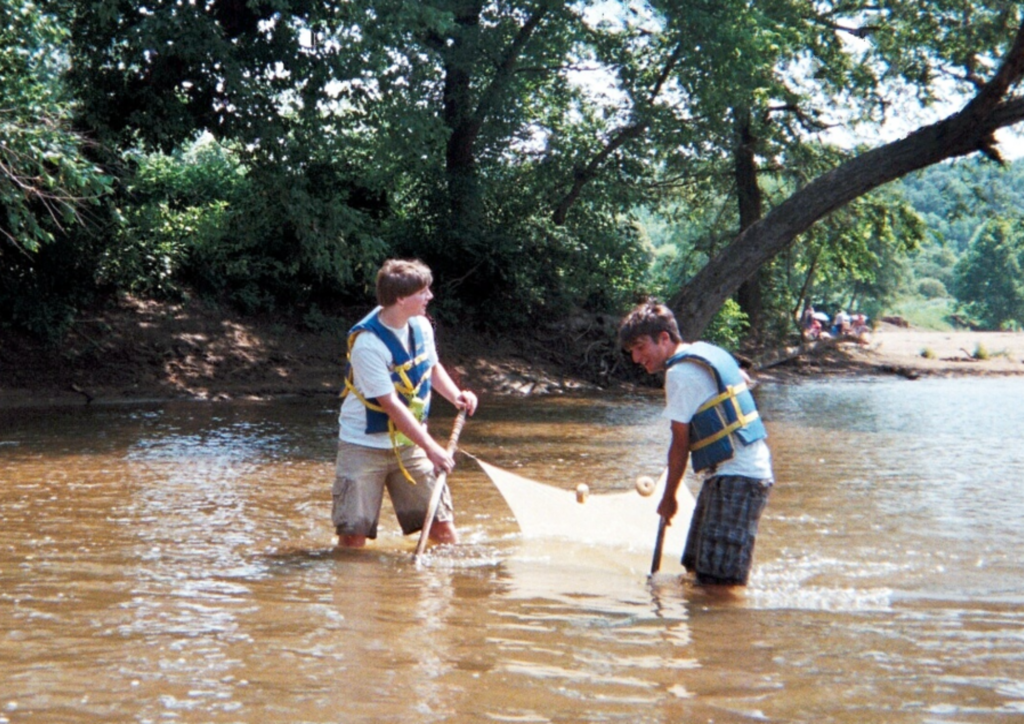
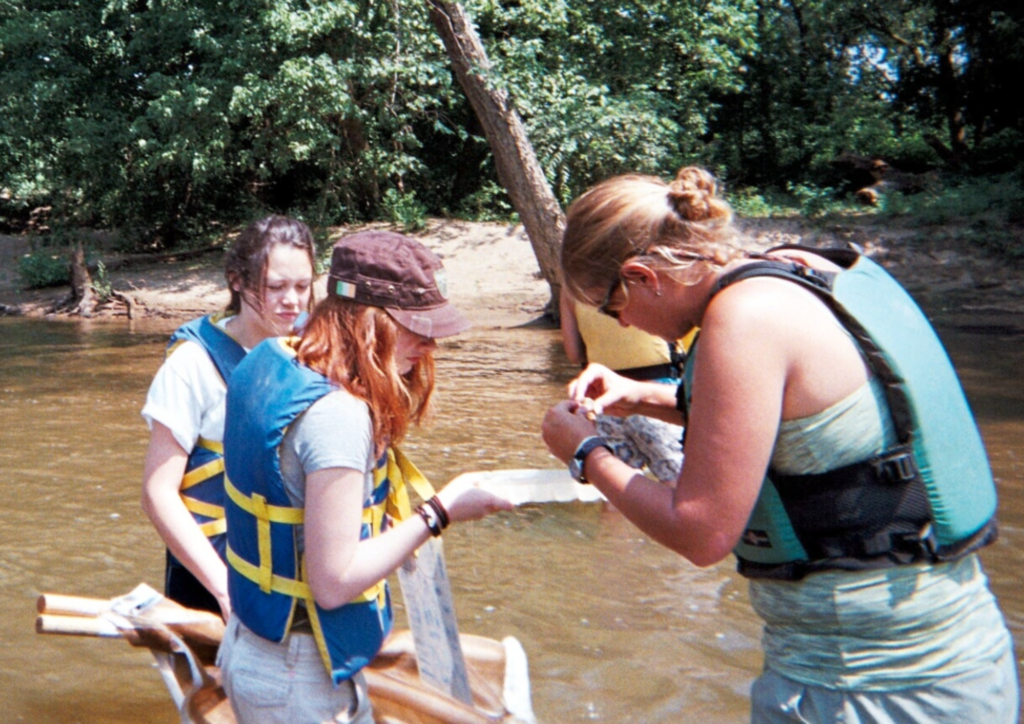
Years later, after moving to Fredericksburg, Butch learned that the local Izaak Walton League chapter wanted to get involved in Save Our Streams (SOS) and needed volunteers. His father had been a League member in the 1960s, so joining felt natural. He officially became a certified Save Our Streams monitor in 2017, building on decades of prior experience, and quickly emerged as a leader in the chapter’s monitoring efforts.
To grow participation, Butch uses what he calls the “Huckleberry Finn and Tom Sawyer method.” For anyone who doesn’t remember from middle school English class, Butch is referring to a classic scene from Mark Twain’s “The Adventures of Tom Sawyer” in which Tom convinces his friends to paint a fence by making it look irresistible. Similarly, Butch focuses on showing—not pushing. Whenever new people join the chapter, the stream monitors “try to invite them at least one time, see if they like it or not.” If they enjoy it and keep coming back, Butch gently introduces the idea of certification. For example, he noticed that the macroinvertebrate identification exam made some prospective monitors anxious. To combat that, he is working on creating a set of specimens preserved in resin to help them practice before they take the exam.
“I don’t ever like to push anything,” he says. “If I do it too quickly, and they’re not in it for the right reason, I don’t keep them, they don’t stay.” Today, he’s proud that every certified monitor in the chapter is there because they truly care. “They’re energetic. Anytime you ask them to do something, they’ll do it, because they’re hooked. And they’re hooked for the right reasons.”
The Fredericksburg-Rappahannock chapter currently monitors three sites—two continuously since 2018, with a third added in 2022. Their philosophy is quality over quantity. As more volunteers complete training (five to six are currently in the pipeline), the chapter hopes to secure a fourth site so they can “divide and conquer.”
The chapter also brings macroinvertebrates to community events to spark curiosity in kids. They hand out Creek Critters postcards to parents and are working on building relationships with local schools and homeschool groups.
Although Butch is retired from his 33-year career as a schoolteacher, he’s still a teacher at heart. “That’s till the day I die,” he says, “That’s what I’m going to do.”
Thank you, Butch, for your dedication to teaching so many people about macroinvertebrates and stream health, and for your many years of service to the Izaak Walton League and Virginia Save Our Streams!
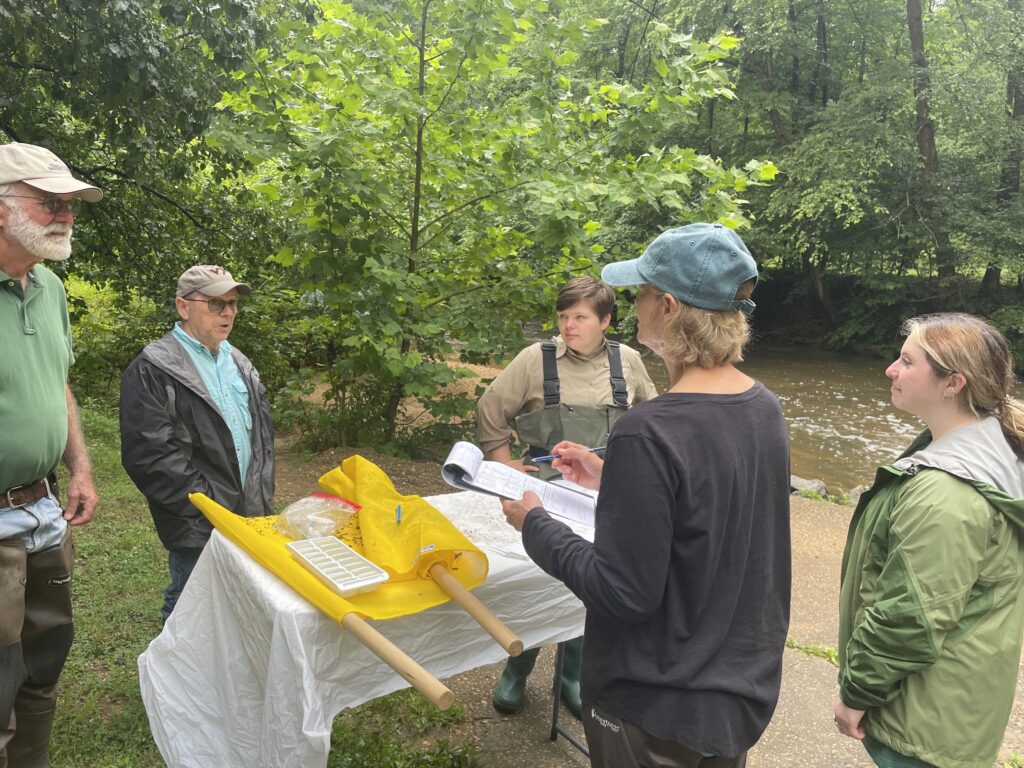
SOS monitoring has something for everyone!
One member of the Fredericksburg–Rappahannock Chapter is blind, but that hasn’t stopped her from participating in Save Our Streams monitoring. Her role is to hold the net steady in the water while other volunteers collect the macroinvertebrate sample—and her service dog even joins her in the stream.
You don’t even have to get into the water to be part of a monitoring team. Volunteers can help by counting and identifying macroinvertebrates, entering results online, or coordinating team logistics. There’s a place for every skill set and comfort level.
Curious to get involved? Visit iwla.org/sos to learn more.
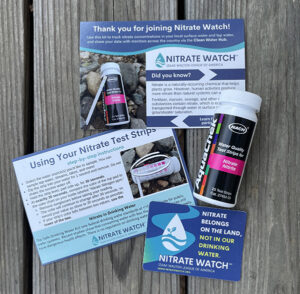 Your kit will include a bottle containing 25 nitrate test strips which you can use to test your water source(s) throughout the year. You’ll also receive postcards explaining how to use your nitrate test strips and how to share your Nitrate Watch results on the Clean Water Hub.
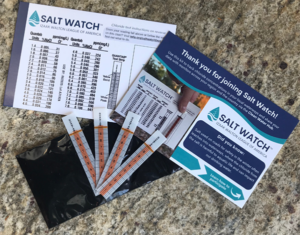 Your kit will include four test strips so you can test your waterway throughout the season. You’ll also receive a chart to help you interpret your results and a postcard with instructions for completing a Salt Watch test and reporting your findings.