Learn
Nitrate Pollution 101
Nitrate (NO3–) is a naturally occurring compound made up of nitrogen and oxygen. Nitrogen is an essential nutrient for plant growth, but human activities add more nitrogen to the landscape than plants and soils can use. As nitrogen moves through the environment, it becomes nitrate. Nitrate is soluble in water, which means it can be easily carried off the land by rainwater, irrigation systems or melting snow. Through surface runoff or groundwater saturation, nitrate frequently makes its way to streams, lakes and our sources of drinking water.
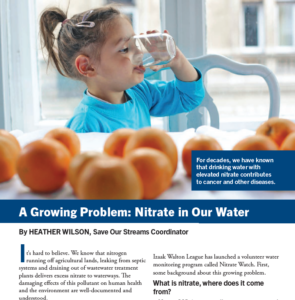
Excess nitrate in water can pose serious problems for the health of humans and the environment. When we consume high levels of nitrate in drinking water, certain health conditions including blue baby syndrome, cancers, thyroid disease, and birth defects are more likely to occur. In aquatic ecosystems, nitrate can have disastrous impacts, including the creation of algae blooms, fish kills, and dead zones.

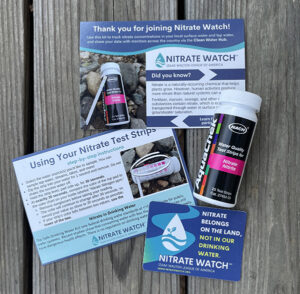 Your kit will include a bottle containing 25 nitrate test strips which you can use to test your water source(s) throughout the year. You’ll also receive postcards explaining how to use your nitrate test strips and how to share your Nitrate Watch results on the Clean Water Hub.
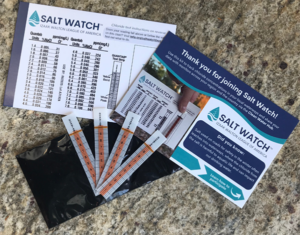 Your kit will include four test strips so you can test your waterway throughout the season. You’ll also receive a chart to help you interpret your results and a postcard with instructions for completing a Salt Watch test and reporting your findings.