Small Wins, Big Impact: Saving Reston’s Streams from Salt Overload
With so much heavy news about our local waterways lately, it’s easy to feel overwhelmed. But this past week, a “small win” in Reston reminds us why community vigilance—and programs like Salt Watch—matter so much for our environment.
A Surprising Discovery at the Cul-de-Sac
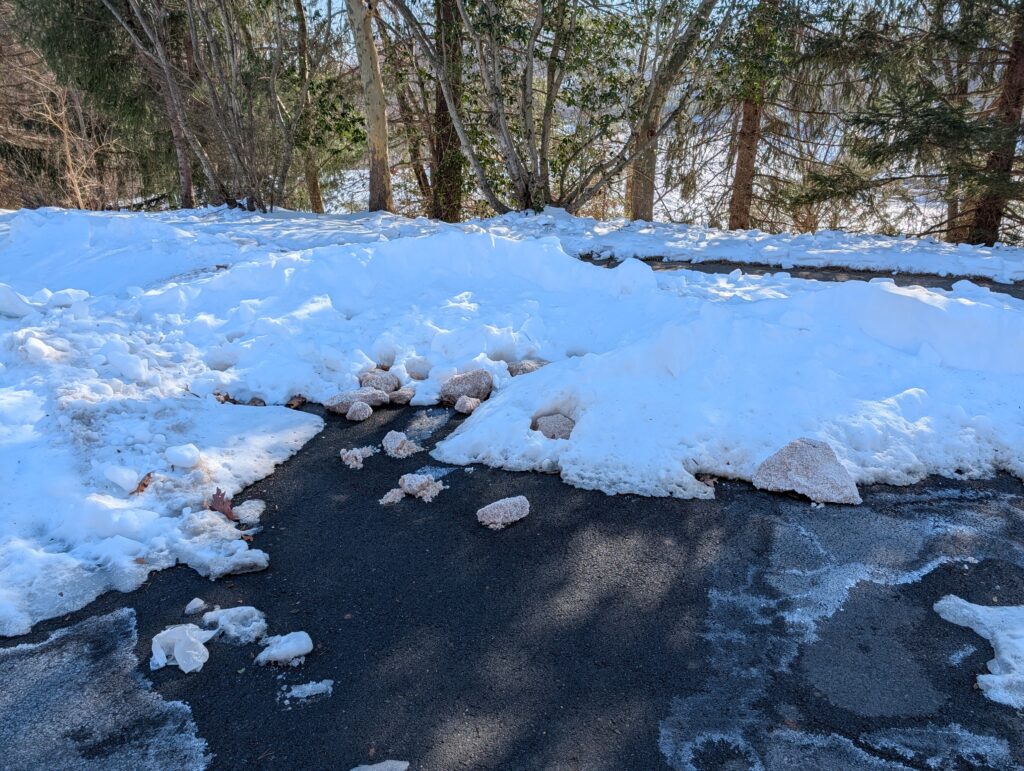
While out collecting Salt Watch readings, Reston Association’s Natural Areas Specialist Sophia Edwards and Watershed Specialist Spencer Orvis stumbled upon a major over-salting incident at a local cul-de-sac. What looked like a standard snow pile actually hid a massive “salt dump”. While the street is under Virginia Department of Transportation’s jurisdiction, is unknown who was behind the salt dump, whether the state department of transportation, a contactor, or a private company.
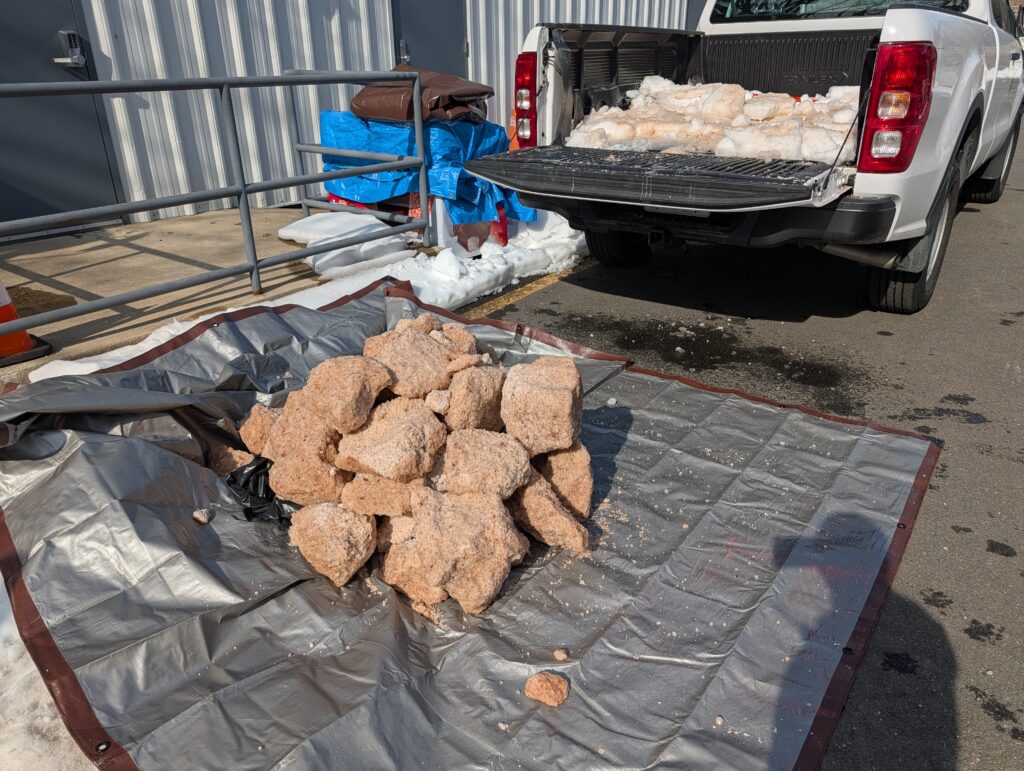
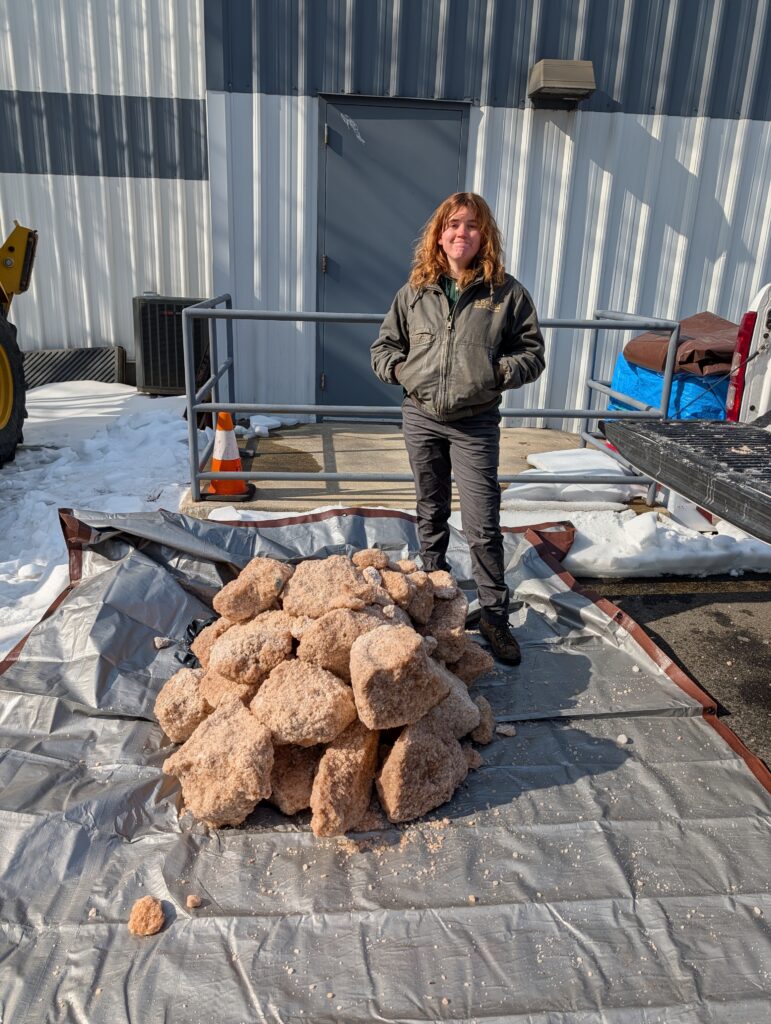
Buried under and scattered on top of the recent storm’s ice were enormous “rocks” of salt. To give you an idea of the scale, individual stones weighed between 30-35 pounds each. Orvis estimated that they dug out and collected between 500-700 pounds of salt.
Orvis noted that “We loaded every stone we could find and hauled them off-site to our maintenance facility.” By physically removing this salt, Reston Association staff prevented hundreds of pounds of chloride from dissolving and flushing directly into Reston’s sensitive streams.
Quick Action on Ring Road
The day didn’t end there. Reston Association staff later learned of another over-salting situation on Ring Road, where a foot-wide, half-inch-thick sheet of “salt crust” had formed on both sides of the road.
Reston Association’s Watershed Manager, Ben Rhoades quickly reported the hazard to Fairfax County. The County then reported the event to the Virginia Department of Transportation since it was a state road. Virginia Department of Transportation responded by sending someone up to inspect the over-salting. Although in this case, the salt was not able to be cleaned up, this kind of rapid reporting is exactly how we hold winter maintenance professionals accountable for oversalting that pollutes our environment, degrades our infrastructure, and threatens our drinking water.
Why It Matters
It only takes one teaspoon of salt to permanently pollute five gallons of water. When hundreds of pounds of salt are dumped in one spot, it creates a toxic environment for fish, amphibians, and macroinvertebrates, plankton and other organisms that keep our aquatic ecosystems healthy. Salt is also not able to be removed by water utilities, so this excessive salt can end up in our drinking water.
Reston Association was founded on the idea of intermingling green space with urban life, and protecting watersheds is a core part of that mission. While a few hundred pounds of salt might seem small compared to the whole county, for the stream at the end of that cul-de-sac, it was a life-saving intervention.
Keep an eye out! If you see piles of excess salt on our roads, sidewalks, or parking areas, report it. Every “small win” adds up to a healthier, cleaner home for all of us.
Photos taken by Reston Association staff.
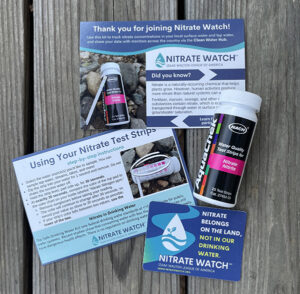 Your kit will include a bottle containing 25 nitrate test strips which you can use to test your water source(s) throughout the year. You’ll also receive postcards explaining how to use your nitrate test strips and how to share your Nitrate Watch results on the Clean Water Hub.
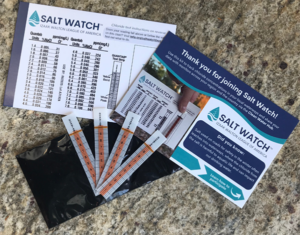 Your kit will include four test strips so you can test your waterway throughout the season. You’ll also receive a chart to help you interpret your results and a postcard with instructions for completing a Salt Watch test and reporting your findings.