Guide to Aquatic Macroinvertebrates: The Basics
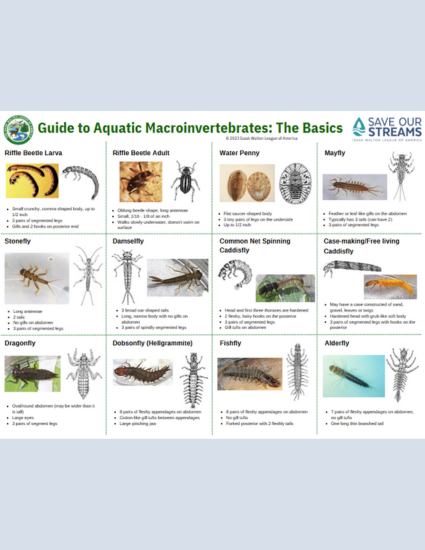
A field reference with photos and a few identifying characteristics for each macroinvertebrate included in the Save Our Streams survey.
SOS Getting Started Guide
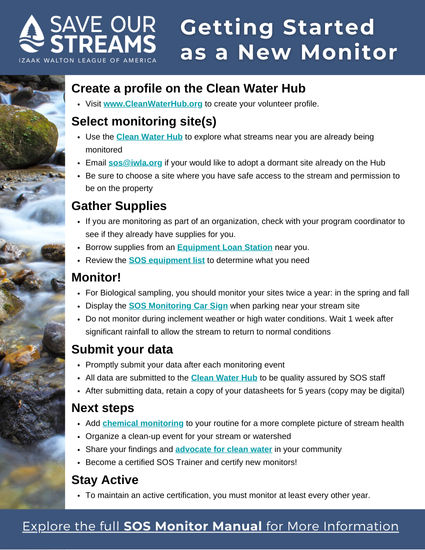
A quick guide of steps to take as a newly certified Save Our Streams monitor.
IWILL Fact Sheet
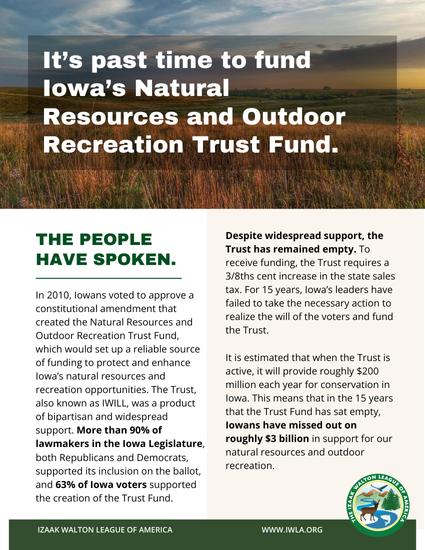
This fact sheet outlines the importance of Iowa’s Natural Resources and Outdoor Recreation Trust Fund, also known as IWILL, as a source of reliable funding to improve water quality, soil…
SOS Chemical Monitoring Manual
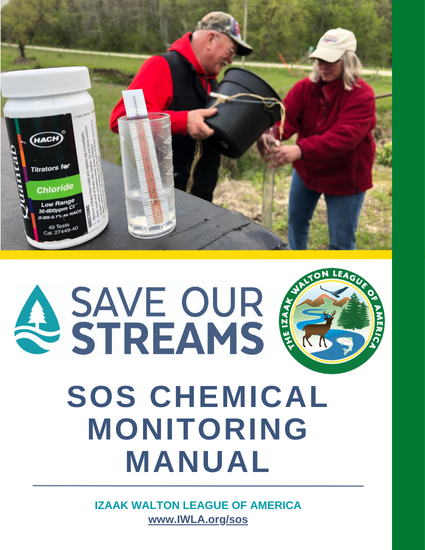
This manual provides a detailed guide to the Save Our Streams chemical monitoring protocol.
National SOS Habitat Assessment Manual
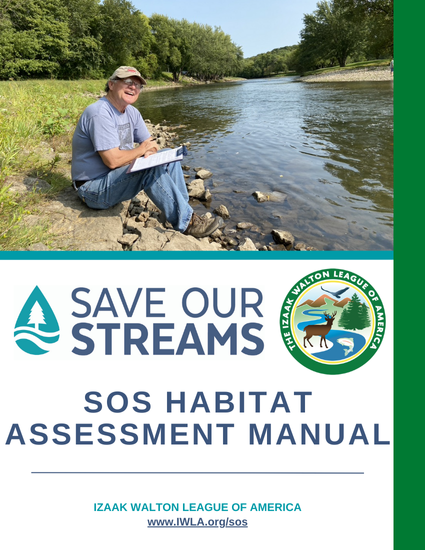
This manual provides guidance on filling out the physical conditions, stream conditions, and land use sections of the Save Our Streams datasheet.
Nitrate Watch standards alignment
This document lists the Next Generation Science Standards which can be supported through participation in the Nitrate Watch program.
Salt Watch Wisconsin Template Letter to Legislators
A template letter to write to your representatives in Wisconsin in support of salt reduction and smarter salt use in your community.
Salt Watch Presentation
A set of presentation slides that can serve as an introduction to the Salt Watch program.
Road Salt Reduction Action Kit for Faith-Based Communities
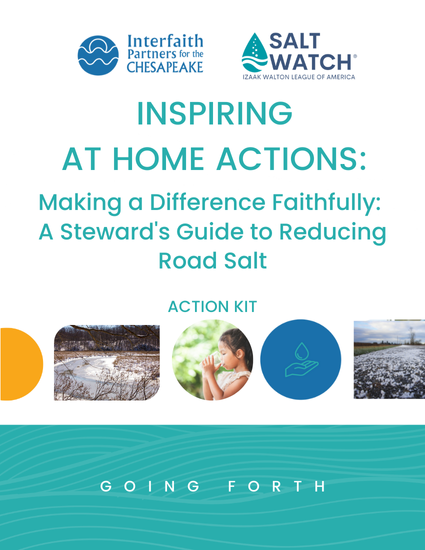
A guide for faith-based communities on how to take action on excessive road salt.
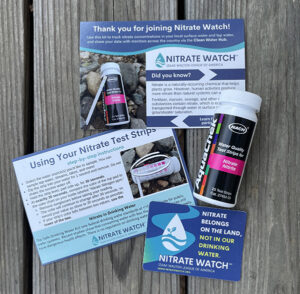 Your kit will include a bottle containing 25 nitrate test strips which you can use to test your water source(s) throughout the year. You’ll also receive postcards explaining how to use your nitrate test strips and how to share your Nitrate Watch results on the Clean Water Hub.
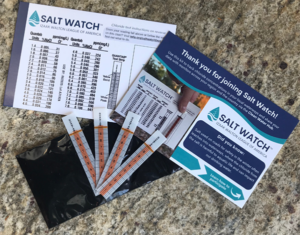 Your kit will include four test strips so you can test your waterway throughout the season. You’ll also receive a chart to help you interpret your results and a postcard with instructions for completing a Salt Watch test and reporting your findings.