Report on Cancer Rates in Iowa Examines Links to Pesticides, Nitrate, PFAS and Radon
On March 25, 2026, the Iowa Environmental Council and the Harkin Institute released an 88-page report titled “Environmental Risk Factors and Iowa’s Cancer Crisis” that summarizes medical research on the risk factors tied to cancer.
The report’s summary states “peer-reviewed research demonstrates that environmental risk factors, including pesticides, PFAS, nitrate, and radon are associated with increased cancer incidence and risk for numerous cancer types. Our analysis shows that all of these carcinogens are present at high levels in Iowa. These factors combine and build on one another as well. While cancer is multifactorial and complex, we know enough to act to mitigate these modifiable risk factors.”
Key findings:
- All of the most common cancers in Iowa (breast, prostate, lung, colorectal, and skin melanoma) have associations with environmental risk factors (pesticides, nitrate, PFAS, and radon).
- In Iowa, 13 of the 16 cancer sites identified in the report as connected to pesticides, nitrate, PFAS, and radon exceeded the U.S. incidence rate in the most recent five-year period (2017 – 2021).
- Of the adult cancers identified as associated with these environmental risk factors, 11 of the 15 cancer types are increasing in the total Iowa population.
- For people under 50 in Iowa, six of 10 cancer types associated with pesticides, nitrate, PFAS, and radon are increasing
At a March 25 press conference about the report in Des Moines, co-author and oncologist Richard Deming commented, “For decades, we have rightly emphasized individual risk factors—smoking, diet, alcohol consumption, obesity, the lack of physical activity.” He said those factors are important considerations but do not fully explain Iowa’s cancer rates.
“Here’s the bottom line. Iowa’s cancer crisis is not inevitable,” said Sarah Green, executive director of the Iowa Environmental Council.” We can do better, and we must.”
The report recommends a number of steps to address the crisis including:
- Effective, standards-based enforcement of pollution limits
- Regulatory reform to prioritize Iowans’ health
- Monitoring for carcinogens in Iowa’s water, air and soil
- Investments in healthy air, water and soil
- Research on environmental risk factors for cancer
The Izaak Walton League’s Nitrate Watch program has supplied thousands of test strips requested by Iowans over the past year in light of the high nitrate levels in the state’s surface water. The League is working on strategies to reduce nitrate pollution in the Midwest and throughout the U.S. The League hosting Nitrate Pollution Awareness Week to highlight the sources and impacts of nitrate pollution July 26-August 1.
Work to reduce pollution in the nation’s waterways has been a central focus for the Izaak Walton League since it was founded in 1922 and the League’s work on reducing nitrate pollution is part of the League’s larger campaign to ensure clean water for the nation.

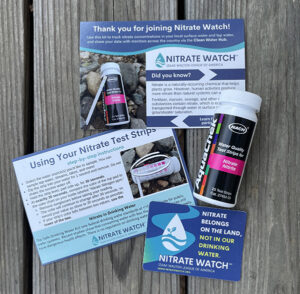 Your kit will include a bottle containing 25 nitrate test strips which you can use to test your water source(s) throughout the year. You’ll also receive postcards explaining how to use your nitrate test strips and how to share your Nitrate Watch results on the Clean Water Hub.
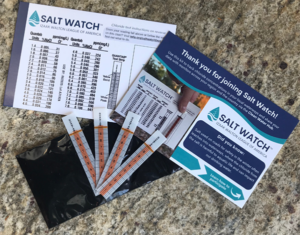 Your kit will include four test strips so you can test your waterway throughout the season. You’ll also receive a chart to help you interpret your results and a postcard with instructions for completing a Salt Watch test and reporting your findings.