Proposed Farm Bill clears first hurdle

In the early hours of March 5, lawmakers of the House Agriculture Committee voted 34 to 17 to pass a draft Farm Bill, The Farm, Food and National Security Act of 2026 (H.R.7567). The legislation and proceedings were led by House Agriculture Chairman Glenn “GT” Thompson (R-PA).
Those following along closely know that progress on the Farm Bill is welcome and overdue. We are currently operating under a Farm Bill that became law in 2018, expired in 2023, and has been extended three times since. The world, and American agriculture, has changed a lot since 2018. The law should too.
Among its many elements that direct food and agriculture, the Farm Bill makes our country’s single largest investment in conservation on private lands. Legislation that will truly meet the moment must include strong conservation elements—the sum of the parts should improve water quality, soil health, wildlife habitat and more.
In the version passed by the House Agriculture Committee, there were several positive features that would advance conservation and get more beneficial land management practices on the ground, including:
- A new program that would provide resources to states and Tribes to improve soil health. The proposal is designed to give a boost to state-level programs and complement existing federal efforts. As proposed, $100 million per year would be available to support technical assistance, financial assistance, on-farm research, education, outreach to producers, outcome monitoring and other eligible functions.
- Important action on the Conservation Reserve Program (CRP) to reauthorize the program through 2031 and maintain national enrollment at 27 million acres. This would align CRP with other major conservation programs and create stability for farmers, ranchers and landowners in their future planning.
- Wise moves to steward taxpayer resources and promote fairness among conservation program applicants. The legislation would reinstate long-standing payment limits for the Environmental Quality Incentives Program (EQIP) and Conservation Stewardship Program (CSP) and set a minimum CSP payment of $4,000.
- Creation of a Forest Conservation Easement Program (FCEP) designed for voluntary easements on privately-owned forests to incentivize conservation, support wildlife habitat and sequester carbon.
- An amendment from Rep. Gabe Vasquez (D-NM) to improve migration corridors and habitat connectivity, including allowing for EQIP and CSP to be used on the same acres, but for different purposes, as Grassland CRP. This proposal aligns with elements of the bipartisan Habitat Connectivity on Working Lands Act (H.R.2235).
While there were a number of positive elements, there are also items that should be improved before the bill becomes law. We look forward to working with leaders in Congress on the following fronts:
- The state and Tribal soil health grant program is a strong proposal with the potential to boost existing programs and inspire new efforts across the country. However, in the draft, the program is housed within CSP and would ultimately redirect program funds. In its own right, CSP is one of the strongest drivers of soil health, water quality and other beneficial conservation practices across the country—and for years, program demand has outpaced available resources. The draft could be improved by making the soil health program a standalone program and keeping CSP’s funding intact.
- While the draft takes the critical step to reauthorize CRP, lawmakers should take the opportunity to make common-sense improvements to the program, such as reestablishing cost-share for mid-contract management and raising dated payment limits. The Farm Bill Congress ultimately passes should include elements proposed in the bipartisan CRP Improvement and Flexibility Act (S.2608, H.R.5111).
- The draft includes multiple provisions that privilege precision agriculture technology within conservation programs, including up to 90% cost-share in EQIP and additional payments in CSP. While precision agriculture has its place, research points to modest gains for water quality and soil health. In contrast, the technology, which would ultimately be subsidized by the taxpayer, is often expensive. Lawmakers should ensure that program resources are used strategically and prioritize practices with the biggest return on investment, such as soil health management practices.
In passing out of the House Agriculture Committee, the bill cleared the first of many hurdles to become law. Next, it must pass the full House of Representatives. If successful, it will then head to the U.S. Senate. At the Izaak Walton League, we look forward to working with lawmakers and their staff to ensure this Farm Bill does right by Americans and enhances stewardship of our natural resources.
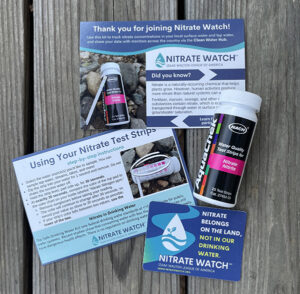 Your kit will include a bottle containing 25 nitrate test strips which you can use to test your water source(s) throughout the year. You’ll also receive postcards explaining how to use your nitrate test strips and how to share your Nitrate Watch results on the Clean Water Hub.
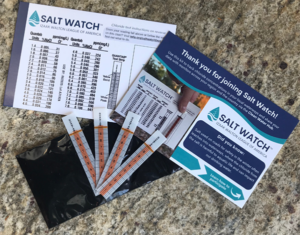 Your kit will include four test strips so you can test your waterway throughout the season. You’ll also receive a chart to help you interpret your results and a postcard with instructions for completing a Salt Watch test and reporting your findings.