Meet a Monitor: Mark Wincek
From “The Burning River” to Salt Watch: Meet Mark, the Citizen Scientist Protecting Cleveland’s Waterways
For some, the environment is a hobby. For Mark, a dedicated Cleveland Metroparks volunteer and Salt Watch monitor, it’s a lifelong calling sparked by a literal fire.
Since joining the Cleveland Metroparks Watershed Volunteer Program (WVP), Mark has become a cornerstone of local conservation. With well over 50 chloride measurements recorded, his data is helping scientists and the local community understand exactly how road salt impacts our local ecosystems. But to understand why Mark spends his retirement often sitting at a picnic table testing water chemistry, you have to look back at a river in flames.
A Career Forged in the Clean Water Act
Growing up in Lakewood, Ohio, Mark spent his youth biking to the Rocky River with a fishing rod in hand. His connection to nature was deep, but his “wake-up call” came in high school when the nearby Cuyahoga River—famously known as the “Burning River”—caught fire due to industrial pollution.
The Cuyahoga River caught fire many times throughout history, but in 1969 the blaze captured national media attention, and the river became a symbol of environmental neglect. Public outrage and requests for federal intervention led to significant legislative action, including the creation of the Environmental Protection Agency in 1970 and the subsequent passage of the Clean Water Act of 1972, which established the first national standards for water quality.
That moment of environmental crisis became a catalyst for the nation and for Mark’s career. He eventually became a Health, Safety, and Environment (HSE) Coordinator, helping companies navigate the then-brand-new EPA and OSHA regulations.
Science on a Picnic Table
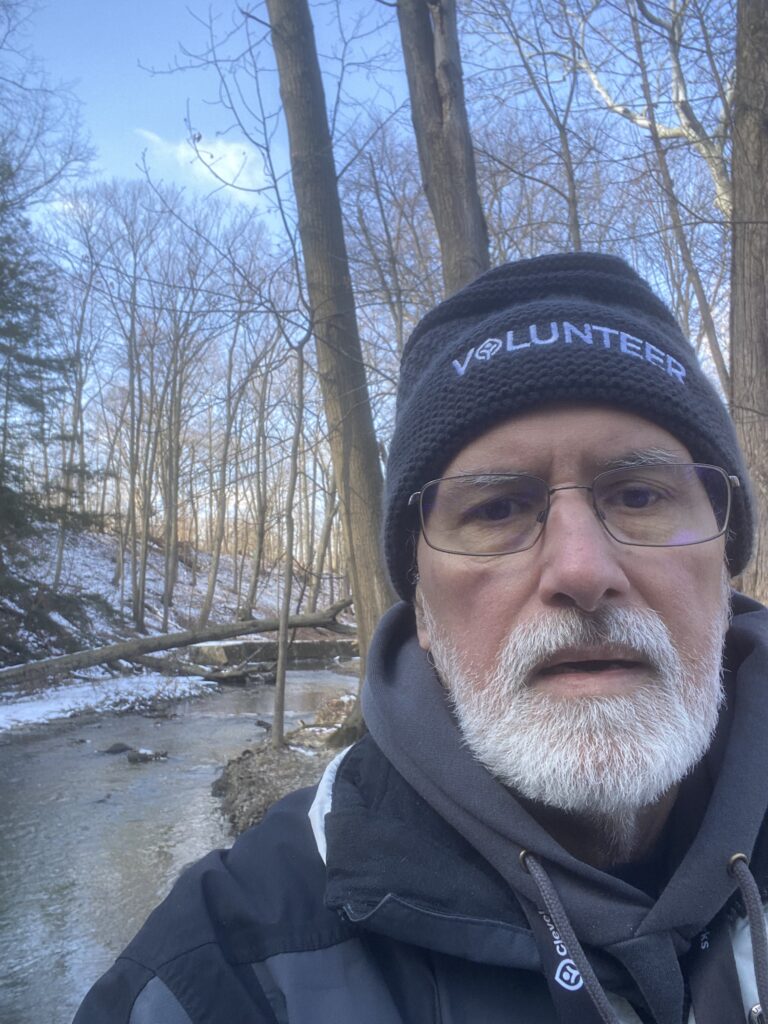
Now in retirement, Mark has traded his office for the creek bed. Every two weeks, he visits his sample sites to test a full spectrum of parameters: conductivity, pH, total dissolved solids, total suspended solids, nitrate, phosphate, oxygen, salinity, and chloride.
“I like trying to figure out what’s happening in the environment and trying to get that information out to people,” Mark says. On nice days, he sets up his “mobile lab” on a park picnic table, often striking up conversations with curious passersby about why water sampling matters.
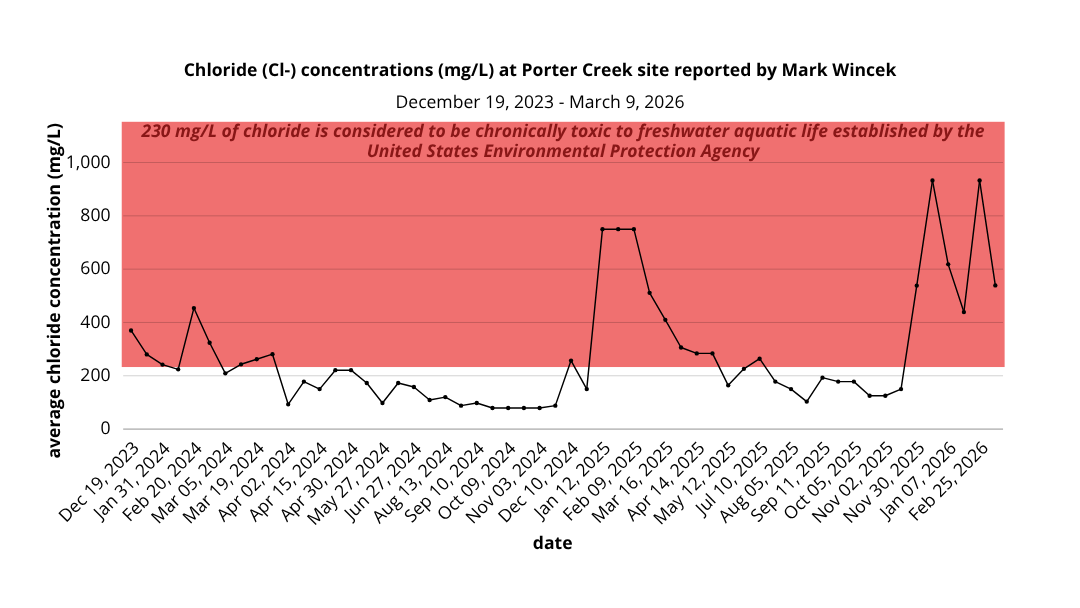
His work goes beyond just reading a test strip. In Porter Creek, Mark has taken the initiative to “look upstream,” investigating the specific sources of elevated chloride to better understand the footprint of road salt in his community.
The “Safety Guy” Perspective on Salt
Mark brings a unique nuance to the “Salt Watch” mission. Having spent a career in safety, he understands the tension between environmental protection and public liability.
“Having been a safety guy, I also understand that dealing with somebody’s broken hip is an issue, too,” he admits. Knowing that lawsuits often play a big role in oversalting practices, he believes the current trend of over-salting is both a waste of money and an ecological threat. We should be striving to find the balance through “Smart Salting” practices—protecting public safety without poisoning the watershed.
More Than Just Water
While water chemistry is his primary focus, Mark is a “jack of all trades” for Cleveland Metroparks. You might find him:
- Searching for invasive praying mantis egg cases in the dead of winter.
- Conducting winter stonefly surveys.
- Teaching his grandkids “good ethics” on how to treat nature.
For Mark, the reward isn’t just the data—it’s the experience. “It gives you a reason for being in the park,” he says, noting that his monitoring days have led to rare sightings of local wildlife, like minks.
Get Involved
Michele Mumaw, WVP Program Assistant, sums it up best: “Mark’s initiative and scientific curiosity make him an exceptional volunteer. His work embodies the spirit of citizen science.”
Mark’s advice for those looking to make a difference? Stick with it. We may not see water quality change overnight, but by collecting data and starting conversations with local community groups like Green Teams, we might stop “shooting ourselves in the foot by polluting [our water] in such a massive way” and instead start protecting the water for our grandkids.
Join Salt Watch today at www.saltwatch.org and request your free kit to start monitoring your local waterways for road salt pollution!
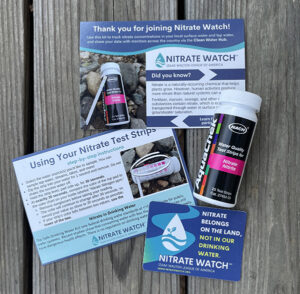 Your kit will include a bottle containing 25 nitrate test strips which you can use to test your water source(s) throughout the year. You’ll also receive postcards explaining how to use your nitrate test strips and how to share your Nitrate Watch results on the Clean Water Hub.
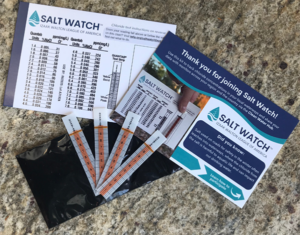 Your kit will include four test strips so you can test your waterway throughout the season. You’ll also receive a chart to help you interpret your results and a postcard with instructions for completing a Salt Watch test and reporting your findings.