Meet a Monitor: Grace Corbett
Student-Led Learning with Nitrate Watch
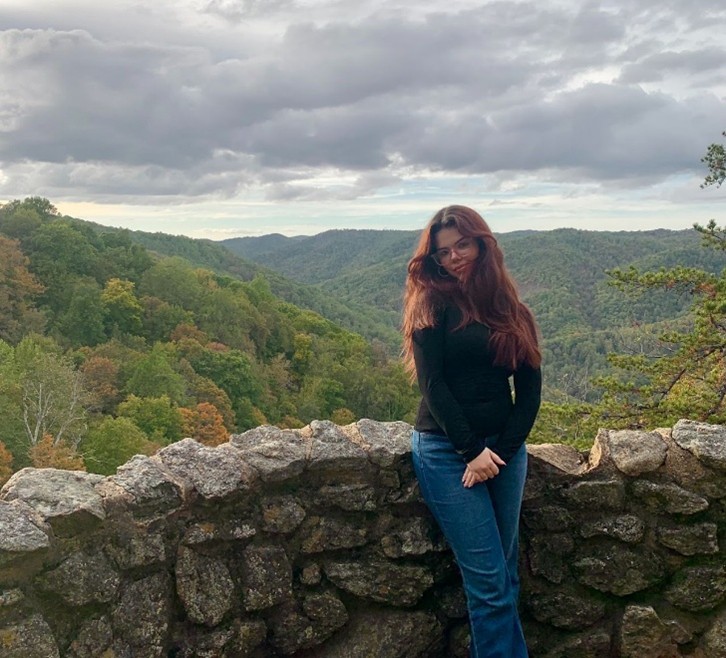
This fall, staff at the Izaak Walton League of America national office had the privilege of working with Grace Corbett, a senior at Nelson County (VA) High School who is enrolled in the Blue Ridge Virginia Governor’s School program. Growing up in a rural area surrounded by rivers and creeks, Grace has always been interested in the relationship between communities and waterways. So, when it came time to choose a topic for her senior capstone project, Grace decided to focus on water pollution. The project included a “professional learning experience”, which Grace completed with the League’s Clean Water Team, spending a day at the national headquarters along with tuning in for several virtual meetings. “Throughout the day, I learned not only about the science behind water pollution but also about the logistics that allow a program like Save Our Streams to function—everything from community training and certification processes to research, outreach planning, and organizational communication,” reported Grace.
For the community service portion of the project, Grace went on to host an educational hike for her fellow students focused on the impacts of nitrate pollution on the environment and human health. 17 students joined her for the field trip along the Piney River trail in Nelson County, Virginia. The students hiked more than 5 miles and conducted Nitrate Watch tests at five different points along the Piney River. Fortunately, their results indicated low levels of nitrate – between 0 and 2 parts per million. Although Grace was expecting some of the results to be higher due to the agriculture in the watershed, she said that “the students still got a real sense of what it’s like to collect data in the field.”
During the hike, the students talked a lot about nitrate pollution – what it is, why it matters, and how it connects to both environmental and human health. They also discussed the difference between point and nonpoint source pollution, and the potential effects of different land uses they could see in the Piney River watershed. “Students were quick to point out how agriculture, forests, and residential areas might all play a role in the river’s nitrate levels,” Grace explained, “It helped make the watershed feel more real and less like something that only exists in a classroom diagram.”
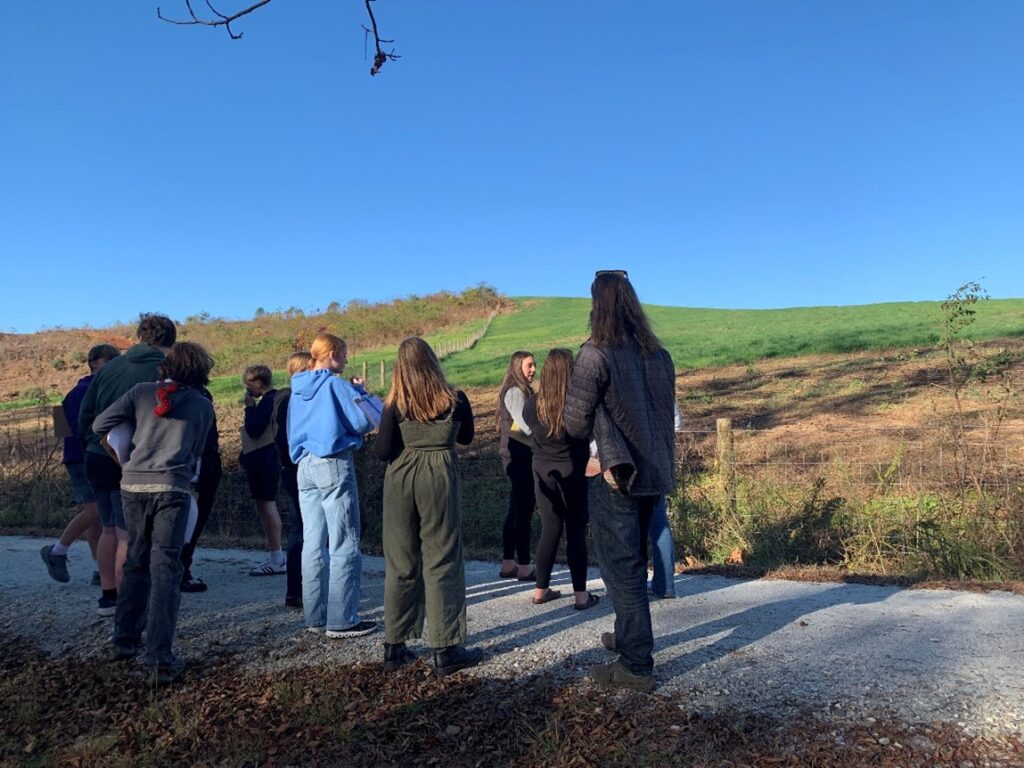
Another focus of the event was the importance of water monitoring, and the information long-term data can provide about the health of a river. “The students were really interested in the idea that even simple citizen science efforts can contribute to a bigger picture of water quality in our community.” Grace shared how the other students could get involved in Nitrate Watch if they were interested in continuing to test on their own. After the trip, survey responses showed a clear increase in understanding of nitrate pollution, watershed systems, and the importance of citizen science.
“Overall, the trip blended spending time outdoors, learning, and hands-on science in a way that made water quality work feel accessible and meaningful,” said Grace, “A lot of the students said it was their first time doing any kind of environmental fieldwork, and it was exciting to see how quickly they connected what we were talking about with what they were seeing around them. It ended up being a really successful trip, not just for the data we collected, but for the conversations it sparked and the interest it created in protecting local watersheds.”
Thank you, Grace, for sharing the impacts of nitrate pollution and the importance of monitoring with your fellow students and community!
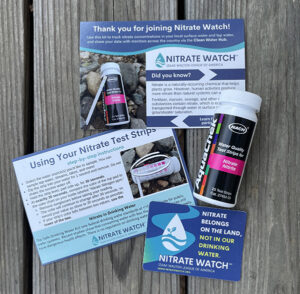 Your kit will include a bottle containing 25 nitrate test strips which you can use to test your water source(s) throughout the year. You’ll also receive postcards explaining how to use your nitrate test strips and how to share your Nitrate Watch results on the Clean Water Hub.
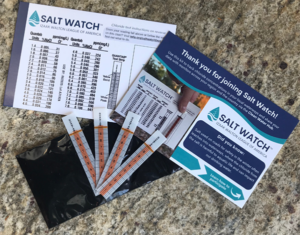 Your kit will include four test strips so you can test your waterway throughout the season. You’ll also receive a chart to help you interpret your results and a postcard with instructions for completing a Salt Watch test and reporting your findings.