Major Sewage Spill in the Potomac River
By: Maggie Dombroski, Mid-Atlantic Save Our Streams Coordinator
A catastrophic sewage spill, described by officials as one of the largest in U.S. history, is currently ongoing into the Potomac River. On January 19, a sanitary sewer overflow collapsed in Montgomery County, Maryland and began discharging raw sewage into the Potomac River near Lock 10 (Cabin John, MD). Since then, the 6-foot pipe has been releasing 40-60 million gallons of raw sewage per day.
The pipe, which carries wastewater from areas near Dulles Airport in Virginia to the Potomac Pumping Station and then the Blue Plains Advanced Wastewater Treatment Plant in Washington, D.C., is under the jurisdiction of DC Water. It is part of the Potomac Interceptor sewer line, which was built in the 1960’s and had already been identified as in need of refurbishment, with a multiyear, multimillion-dollar repair on the horizon.
“This sewage spill is of an order of magnitude that is hard to even comprehend,” says Sam Puckett, Clean Water Program Director at the Izaak Walton League of America. “This should serve as a wake-up call for municipalities and government agencies across the country. Our aging infrastructure requires proactive maintenance and funding to ensure the safety of our communities, the health of our environment, and the vitality of the industries that depend on a clean river.”
According to DC Water, they have not yet been able to fully assess the damage and there is not yet a timeline for repair. In the meantime, a bypass system of pumps was activated to temporarily divert the flow into the C&O Canal and then back into the sewer system. This has significantly reduced, but not completely halted, the flow of sewage into the Potomac River. Prior to the installation of the bypass, it is estimated nearly 300 million gallons of sewage were discharged into the Potomac.
This is an extreme pollution event. The Potomac Riverkeeper Network has been sampling the Potomac River near the location of the spill and found E. coli concentrations nearly 12,000 times the limit for human contact. Some fish kills have already been observed downstream, and the Maryland Department of the Environment issued an emergency closure of shellfish harvesting 60 to 70 miles downstream. It is not yet clear how long lasting and widespread the ecological impacts of the spill will be.
According to the Potomac Riverkeeper, Dean Naujoks, “We have seen no response from public health agencies to determine whether this type of raw sewage will impact public health and the environment.” This may be partly due to the time of year – if this had occurred during the summer recreation season, “they would literally have to shut the river down, and there’d be public health notifications all over the place,” said Naujoks. Although it is currently winter, there may be impacts of this event later in the year, when any sewage that is frozen or settled into the sediment is released.
There were warning signs ahead of this spill – DC Water had recently completed a repair on a section of the deteriorating pipe about a quarter mile from the rupture. Deteriorating wastewater infrastructure is an issue across the District – and the country. According to a 2022 Environmental Protection Agency survey of wastewater infrastructure, the District needs more than $1 billion within the next 20 years to make these repairs – a number which rapidly multiplies when zoomed out to the rest of the U.S. “This is something we see and will continue to see, where these pipes fail and these massive sewage dumps occur,” said Gary Belan, senior director with American Rivers, “This is why we can’t defer maintenance of our wastewater infrastructure. Too often, we’re dependent on these disasters to prod us forward.”
How you can get involved:
If you live in the D.C. metro area, ask your local health department to issue clear guidance for contact with the River, including fish consumption, pet exposure, boating and kayaking, and swimming. Also, reach out to your members of Congress and local elected officials to let them know that this sewage spill is unacceptable for water quality, public health, and the environment. It needs to be cleaned up and the pipe repaired as soon as possible, and rehabilitation of other failing wastewater infrastructure needs to be prioritized moving forward.
“Thank goodness this spill occurred downstream from the drinking water intake on the Potomac,” says Sam Puckett. “We cannot wait for the next ‘preventable’ disaster. Use your voice now to demand the protection our environment deserves.”
Learn More
- Massive sewage spill flowing into Potomac River upstream from DC – NBC4 Washington
- Nearly 300 million gallons of sewage has entered Potomac River, environmental group says | FOX 5 DC
- Millions of Gallons of Raw Sewage Spills Into the Potomac River – The New York Times
- Crews work to fix pipeline after sewage spills into Potomac River – The Washington Post
- Nearly contained sewage spill leaves serious concerns for the Potomac River | Pollution & Solutions | bayjournal.com

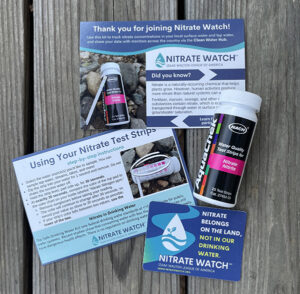 Your kit will include a bottle containing 25 nitrate test strips which you can use to test your water source(s) throughout the year. You’ll also receive postcards explaining how to use your nitrate test strips and how to share your Nitrate Watch results on the Clean Water Hub.
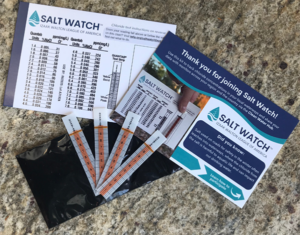 Your kit will include four test strips so you can test your waterway throughout the season. You’ll also receive a chart to help you interpret your results and a postcard with instructions for completing a Salt Watch test and reporting your findings.