Leading the Change: Women Shaping a Sustainable Future
By: Abby Hileman, Salt Watch Coordinator
On March 27, 2026, the energy at the BlackRock Center for the Arts was buzzing with excitement. Councilmember-at-Large Laurie-Anne Sayles hosted her fourth annual Women’s History Month event, bringing together a powerhouse of local and federal leaders in Germantown, Maryland.
This year’s theme, “Leading the Change: Women Shaping a Sustainable Future,” served as a call to action for women to take their place at the forefront of environmental stewardship.
A Star-Studded Lineup
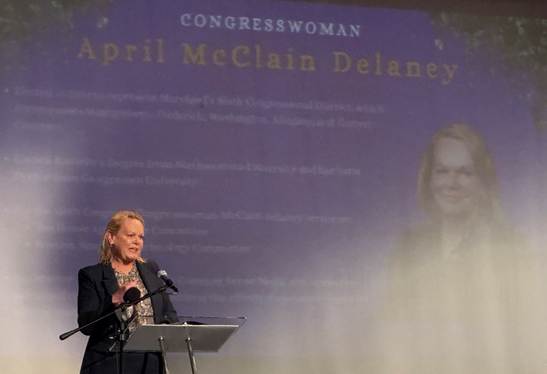
The event was guided by Mistresses of Ceremony Latisha Gasaway-Paul, a prominent local business owner (co-founder of Minds in Motion Childcare, the largest Black-owned childcare business in Montgomery County, Maryland), and Jordan Lindsay, a two-time Emmy Award nominee and Public Information Officer and Spokesperson for the Montgomery County Council. The room was further inspired by heavy hitters in Maryland politics:
- Keynote Speaker: Lieutenant Governor Aruna Miller, the first woman of color and immigrant elected to statewide office in Maryland. In her role, she has worked to prioritize clean energy investment, environmental protection, and promote sustainable infrastructure.
- Guest Speaker: Congresswoman April McClain Delaney represents Maryland’s Sixth District. In her work, the Congresswoman has focused on agricultural conservation, climate resilience, and environmental infrastructure. During her speech at the event, she noted that “This inspiring gathering underscored the critical role women play in advancing environmental justice and sustainability. At its core, this work is about building communities where everyone can thrive—environmentally, socially, emotionally, and economically—while strengthening the infrastructure that supports our collective health and well-being.”
Healthy Planet, Healthy People
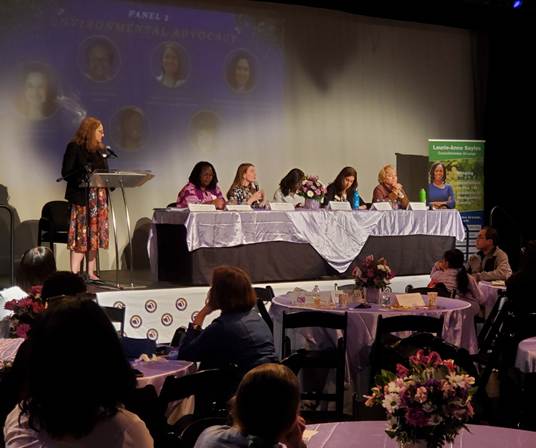
The event also featured two panels, Green Businesses and Environmental Advocacy. From the panels, two major takeaways echoed through the hall:
- Alignment of Health: What is healthy for our environment is inherently healthy for us.
- The Easy Choice: We must strive to make sustainable and healthy options, especially in food. The most cost-efficient and “easy” choice for everyone should also be the most environmentally sustainable and healthy choice.
Spotlighting “Salt Watch”
Among the advocates was Abby Hileman, Salt Watch Coordinator for the Izaak Walton League of America. Representing the Environmental Advocacy Panel, Abby shared a vision of a future where environmental health isn’t an afterthought.
When it comes to winter salt pollution, Abby envisions communities banding together to shovel for neighbors, promoting “green infrastructure,” and using brine technologies to protect our waterways.
Abby’s journey to becoming the League’s Salt Watch Coordinator wasn’t so much a career choice as it was an upbringing. Raised in rural Western Pennsylvania next to state game lands, she grew up in a community that lived with the land rather than developing it. For Abby, conservation is common sense—a series of small, intentional actions, like planting native species, that lead to large-scale success.
Despite her lifelong environmental roots and career in education, Abby is the first to admit that road salt pollution wasn’t on her radar until she joined the League. This personal realization drives her mission today: she encourages open conversations about best practices, believing that if we don’t recognize how our habits cause harm, we can’t begin to change them.
Why Women are the Backbone of Conservation
During the panel, Abby highlighted a powerful trend: across water utilities, cities, and watershed groups, women are spearheading the movement. In many of the organizations she works with, “Women are driving the change and are often the backbone of volunteer monitoring… collecting data and turning it into meaningful action.” And it is imperative that women keep being involved with conservation issues, especially through holding positions of leadership and decision-making.
This leadership is more than just representation; it’s a necessity for public health. Road salt pollution is a major environmental justice issue, and those in historically marginalized communities are most at risk of water insecurity. For example, corrosive salt runoff was a key factor in the 2014 Flint Water Crisis. In underserved neighborhoods with aging infrastructure, salt infiltration can lead to pipe corrosion and lead leaching, creating significant health equity concerns.
Because women across the globe are disproportionately impacted by water scarcity and quality issues, their involvement is vital. When women hold decision-making roles, the needle moves faster toward sustainable outcomes and community resilience.
Beyond the mission, Abby noted a practical reason why women are drawn to these roles: non-profits often prioritize the flexibility and work-life balance necessary to sustain a long-term career. This allows women to maintain their professional careers and start a family, instead of having to choose.
Empowering the Next Generation
How can women and girls lead in safeguarding local waterways and environments? We must teach people to love something before teaching them how to save it. That lesson applies to any environmental resource, especially one as precious as water.
Abby also emphasized that representation matters. By showing up and supporting girls in STEM/STEAM and science fair projects, we give young women the tools and confidence to become the next generation of leaders—whether they stay in conservation or take those leadership skills elsewhere.
Your Call to Action: Two Steps to Change
You don’t need a title to be an advocate. Here is how you can get started:
- Today: Monitor your local waterway or drinking water. Visit SaltWatch.org to request your free test kit.
- Tomorrow: Use those results to advocate. And lean on Salt Watch resources like the Advocacy Guide to help navigate your journey.
Remember, advocacy isn’t just lobbying politicians; it’s talking to your neighbors, reducing salt on your own driveway, or speaking with your HOA.
A sustainable future is built by us, together. How will you lead the change?
Featured image credit: Anna Awimbo
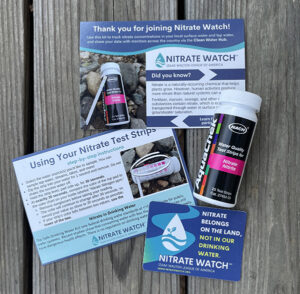 Your kit will include a bottle containing 25 nitrate test strips which you can use to test your water source(s) throughout the year. You’ll also receive postcards explaining how to use your nitrate test strips and how to share your Nitrate Watch results on the Clean Water Hub.
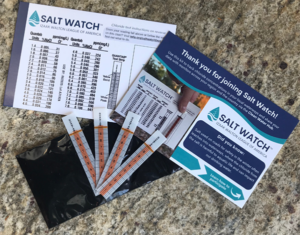 Your kit will include four test strips so you can test your waterway throughout the season. You’ll also receive a chart to help you interpret your results and a postcard with instructions for completing a Salt Watch test and reporting your findings.