It Could Save Your Life: Connecting the Dots between Human and Wildlife Health
By: Michael Reinemer, Editor
Understanding zoonotic diseases, which are shared by wildlife and humans, provides life-saving guidance for public health.
Five years ago, a woman in Fremont County, Wyoming, not far from Yellowstone National Park, developed a cough and shortness of breath. It got worse and worse and after a couple of days she went to the hospital. Testing negative for COVID-19 and pneumonia, the patient continued to decline and eventually needed a mechanical ventilator to breathe.
The patient’s history taken during her exam revealed recent contact with cats. This was important since medical professionals, veterinarians and public health officials know that some diseases endemic among wild and domestic animals can also infect people. These are called zoonotic diseases.
The cat contact prompted a disease specialist to recommend additional testing. Finally the Wyoming Public Health Laboratory was able to confirm that the pathogen afflicting this patient was Yersinia pestis—the plague.
The patient was treated with antibiotics. She recovered and was discharged from the hospital after 35 days. Linking the patient to animal contact, getting an accurate diagnosis and prompt antibiotic treatment probably saved her life.
This deadly form, the pneumonic plague, persists in some animals, including wild rodents and their fleas. People can become infected if bitten by an infected flea or through contact with infected animals including domestic cats. And it can spread among humans.
Established in a few port cities in U.S. around 1900, plague is concentrated in a few western states, and it rarely infects humans. But undiagnosed and left untreated, it is nearly always is fatal.
Vital role for wildlife hospitals
Wildlife hospitals not only provide care for injured or orphaned animals, they help to inform the public about how to keep animals and humans safe. They also provide guidelines about what to avoid when you encounter a sick, injured or orphaned animal. More on that later.
One of the larger, overarching contributions of veterinary science is accomplished through an approach called One Health, which has gained traction in recent decades. This way of understanding zoonotic diseases considers the close relationships between the health of humans, animals and the environment. Sharing information across several scientific disciplines aims to ensure optimal health outcomes for all.
Dr. Steve Osofsky, a veterinarian who teaches at Cornell University’s College of Veterinary Medicine, helped to shape the One Health approach several decades ago. He describes it as “a way of thinking more holistically…recognizing that our own health and the health of domestic animals and the health of wild animals and biodiversity writ large are all inextricably linked to each other, and all are underpinned by how we approach environmental stewardship.”
Rising tide for zoonotic diseases
This One Health approach helps scientists deal with the growing threat of zoonotic diseases. Among the newly emerging infectious diseases, about 75 percent are zoonotic.
What’s at stake? Zoonotic diseases account for about 2.5 billion illnesses and 2.7 million deaths per year, worldwide.
Zoonotic diseases account for about 2.5 billion illnesses and 2.7 million deaths per year, worldwide.
Global trade, climate change, intensive farming and developments that encroach into wildlife habitat can all create conditions where diseases spread more readily from animals to people.
A World Health Organization report from 2022 states that “rising temperatures encourage the development of zoonotic hosts, and more people are exposed to vector-borne diseases, because when temperatures rise, both pathogens and vectors reproduce more quickly.”
The geographic spread of diseases also expands as temperatures rise, bringing diseases to areas they may not have been found previously. Globalization and trade also contribute to expanding ranges—the West Nile virus is one example.
These conditions can accelerate the spread of both well-known and new, emerging diseases, which may be caused by viruses, bacteria, fungi, parasites or prions (proteins that can misfold and cause brain damage).
Rabies, salmonella, Lyme disease and avian flu, among other diseases, can thrive in environments where the lives of humans and animals intersect. Some can affect food safety and the agricultural economy—consider the impact on poultry and egg prices.
In January 2025, the CDC, USDA and Department of the Interior published an ambitious five-year plan called the “National One Health Framework to Address Zoonotic Diseases and Advance Public Health Preparedness in the United States.” Its mission is to improve public health readiness, food safety, security and sustainability while also promoting conservation and biodiversity.
Drawing together different agencies and partners aims to help “address health concerns in a more collaborative, effective, efficient, and sustainable manner than each sector approaching these issues alone,” according to the CDC announcement.
But in January 2026, the U.S. formally withdrew from the World Health Organization based on an executive order by President Trump. Dr. Bruce Kaplan, an epidemiologist who previously worked at CDC and co-founded the One Health Initiative, said, “This exit significantly impacts the One Health approach by disrupting global surveillance, funding and cross-sectoral coordination.”
In mid-January 2026, I reached out to CDC for an update on the One Health framework. As of early February, I had not heard back. I hope this initiative has not fallen off the agency’s radar.
A top wildlife hospital in rural Virginia
The Blue Ridge Wildlife Center in Boyce, Virginia, is one of the nation’s top teaching hospitals for wildlife. With a staff of 15 and state-of-the-art surgery and recovery facilities, the BRWC provides care and rehabilitation for roughly 4,000 animals patients each year.
A large part of their mission is education and guidance for the public and policymakers, plus onsite residential training programs for future wildlife care professionals. Closely monitoring the health of wildlife and domestic animals can serve as early warning signs for disease that can spread to humans.
“Everything we do is One Health,” says Dr. Jen Riley, veterinarian and hospital director at BRWC.
Riley says understanding these diseases is essential for managing or preventing future pandemics and caring for humans and wildlife alike. There is “spillover” when animal diseases spread to humans. And there is “spillback” when humans spread diseases to wildlife. COVID-19 is one example. The virus originated in animals, spread to humans and then humans spread COVID to some wildlife populations, like white-tailed deer.
“It mutates within these wildlife populations complicating efforts to control its spread,” Riley says. These diseases can affect the wild food web, wildlife health and populations, public health, costs of veterinary care and the human-animal bond, she notes.
As they treat wild animals, BRWC staff also collect data about diseases and participate in surveillance research and prevalence studies. The Center works on about a dozen research programs managed by universities, the USDA and other organizations that together serve as a monitoring system for diseases, especially new or emerging diseases.
Closely monitoring the health of wildlife and domestic animals can serve as early warning signs for disease that can spread to humans.
The goal, Riley says, is to help predict and model disease outbreaks and allocate resources to prevent them. The Center has recently contributed to scientific papers on tick-borne viruses in wildlife and on circulation of the La Crosse virus in Virginia.
Staff also collect local data about Powassan virus, a tick-borne disease named after a town in Ontario, Canada where a child died from the disease. Currently, the disease seems concentrated in the Northeast and Great Lakes regions, but Riley says it is probably under-diagnosed. Of 836 animals tested at BRWC, 18 percent tested positive for Powassan, which was found in white-tailed deer, opossums, cottontail rabbits and other species. There are no medicines for treating or preventing Powassan.
As the BRWC is able to identify new or emerging diseases in wildlife, their publications notify the medical community that these pathogens are circulating so medical professionals can be aware that they exist locally and could affect humans.
Riley says, “We are training future wildlife professionals to not only learn to care about One Health but to protect humans, animals and the environment from future pandemics.”
BRWC provides dozens of education programs that often enlist their resident “ambassador” animals whose injuries were too severe to allow them to be released to the wild.
Going viral with threats
In the context of One Health, one prominent example is highly pathogenic avian influenza (HPAI), which currently afflicts wild bird populations and sometimes breaks out in chicken and other poultry populations. The H5N1 variant of this virus has spread to more than 50 mammals such as rats, seals, house cats and domesticated animals including roughly 1,000 herds of dairy cattle across 17 states in the U.S.
The potential harm of HPAI to some sectors of our food system is enormous, including economic damage. The poultry business is a $664 billion industry that employs about two million workers in the U.S.
Human infections remain rare in the United States, with only a small number of confirmed HPAI cases to date. But without testing, it’s hard to know how prevalent the virus is.
The influenza virus easily mutates, which makes it unpredictable and hard to prevent. You know this because the flu vaccine gets updated every year in order to tackle the most prevalent form of the virus. Most pandemic preparations in the U.S. focus on influenza because of its potential to mutate into an especially deadly form, like the 1918 flu, which killed at least 50 million people worldwide.
In a 2025 article, Cornell’s Osofsky, wrote, “the more a virus like this is able to mutate and find its way into a wide range of species, especially farmed species that live in close contact with people like poultry and now cattle, the more the odds go up that a viral strain will more easily make that leap to people.”
“Protecting wildlife ultimately protects all of us.”
At BRWC all high-risk species are tested for HPAI. That list includes waterfowl, game birds, raptors and corvids (crows and ravens). Riley says positive cases in birds show us where the HPAI virus exists in the Atlantic flyway at any given time.
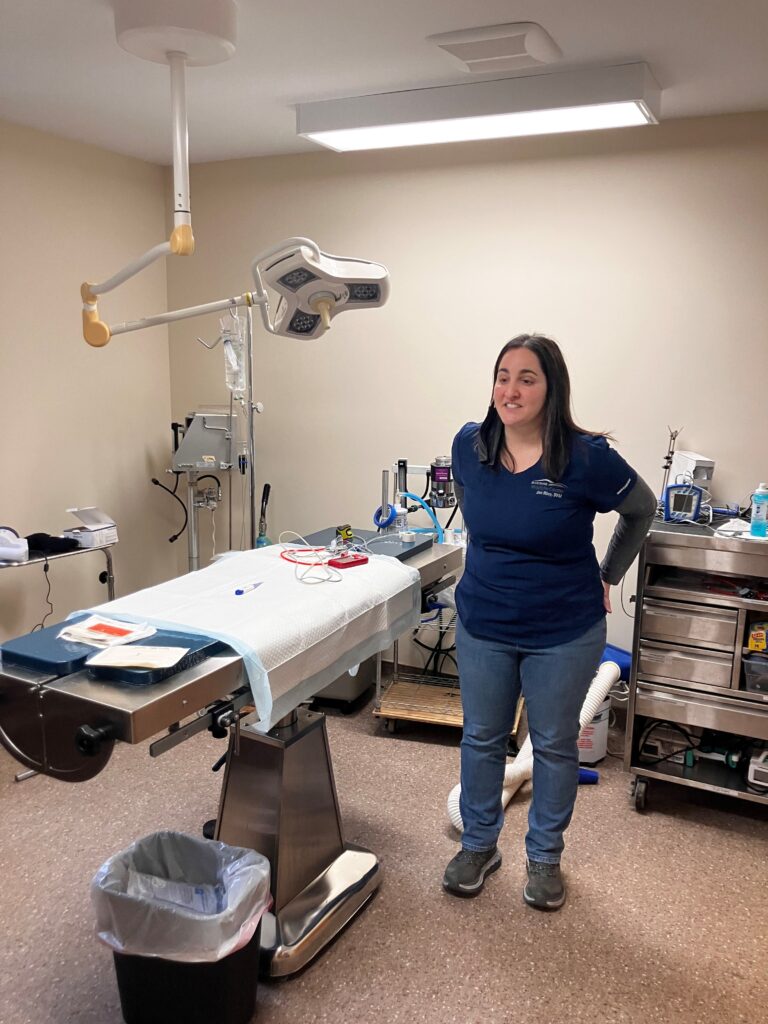
In my tour of the hospital, Riley showed me their quarantine rooms and personal protective equipment (PPE) that the veterinarians and rehabilitators use for their own safety when handling high-risk animals.
Protect yourself from bird flu
- Do not handle sick or deceased birds.
- Did not feed pets or people raw milk products.
- Keep cats indoors.
- Handle and cook poultry properly.
- Use caution and use PPE when visiting farms or other areas with livestock.
- Inform your doctor about potential exposure to infected animals.
- Report suspicious cases of multiple (five or more) dead birds that may have HPAI.
Source: Blue Ridge Wildlife Center
Human-caused injuries
In addition to illnesses, some animals also suffer from human-caused hazards, whether windows, vehicles, lead ammunition, glue traps or trash. BRWC also treats these animals that are sick, injured or orphaned.
Glue traps which are designed to catch insects and mice sometimes also catch birds, snakes and other wildlife that are attracted to the trapped insects or mice.
One recent patient at BRWC was a Carolina wren—a small bird with a big personality. Removing the glue from its delicate feathers took several days and multiple sessions of gentle cleaning and rest to prevent “capture myopathy,” which is the death of muscle tissue caused by the stress of captivity.
For that reason, BRWC discourages use of glue traps to control pests. A number of retail stores have discontinued sale of these traps because of their harm to wildlife.
If you come across a bird or other animal stuck to a glue trap, BRWC recommends that you cover the remaining sticky surfaces with cornmeal, bits of tissue or dirt to prevent any further sticking and then take the trapped animal to a rehabilitator rather than try to remove the animal from the glue yourself.
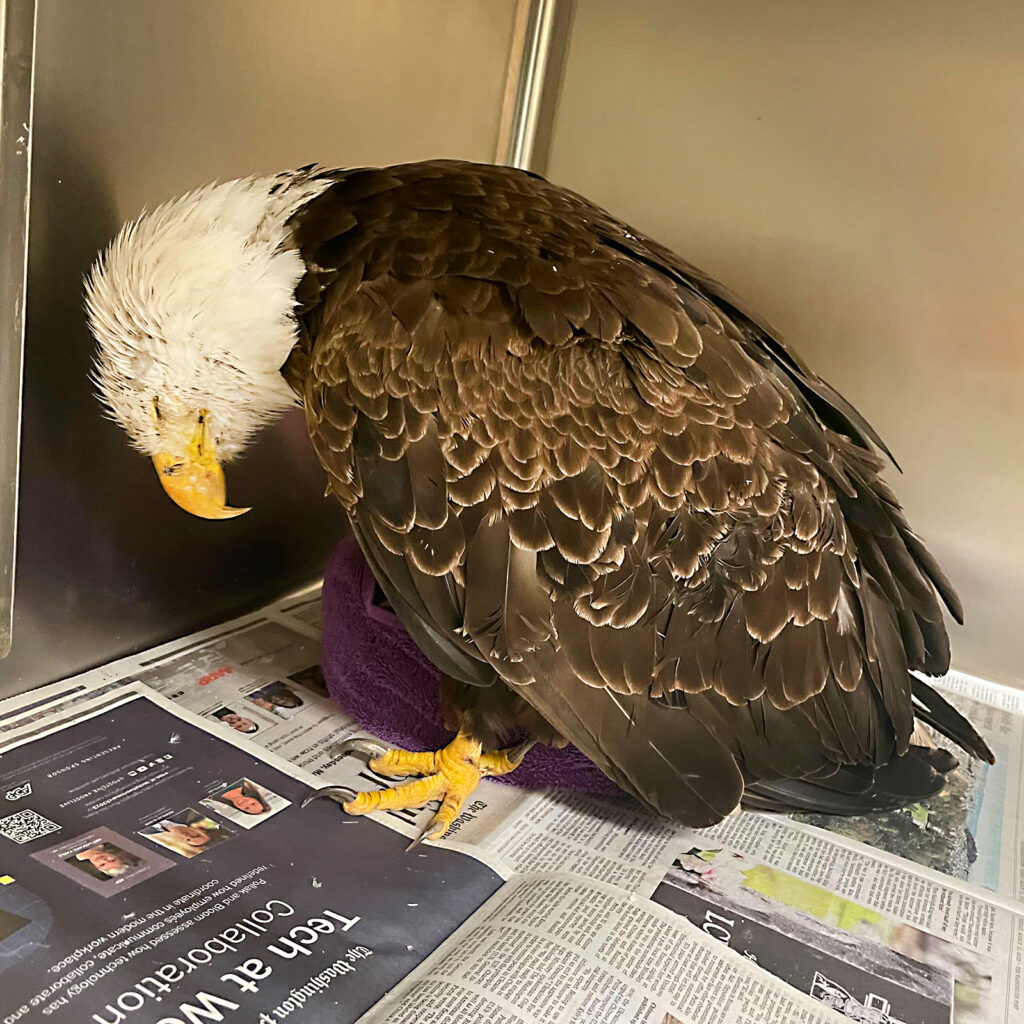
Fishing line and lead also pose threats to birds. Another recent patient at BRWC required a dramatic rescue and intensive care and rehab. A bald eagle had become tangled in fishing line and was hanging upside down and struggling in a tree. Officers from the Loudon County Animal Services climbed the tree and freed the bird. A local wildlife rehab organization called Kristi’s Caring Hands transported the eagle to the hospital.
The bird had suffered tissue trauma to one wing. But a blood test identified a more serious threat that often afflicts scavenging birds—lead poisoning. Eagles and other birds sometimes consume shotgun pellets or fragments of lead bullets when eating gut piles from deer hunts or carcasses of dead wildlife.
The staff at BRWC administered several rounds of chelation therapy, in which medications given to the bird bind with lead in the bloodstream so the lead can be safely excreted.
With strict cage rest to allow the wing to heal and an eventual move to a large flight cage where the bird could practice flying, the eagle was finally released about two months after coming to the hospital. The bird was released into the wild at a location near to where it was found.
Another threat to eagles, other raptors in general and other birds and mammals is rodenticide—poison baits used to kill rats. Eating the poisoned rats can harm or kill wildlife.
To prevent this type of injury to wildlife:
- Gather any excess fishing line and dispose of it safely.
- Switch to non-lead ammunition for hunting to prevent poisoning of scavengers.
- Appreciate that consuming lead-contaminated meat can harm both wildlife and human health.
Pets like outdoor cats cause many of the injuries to wildlife treated at BRWC. Among animal patients that suffered attacks by cats, only about 25 percent survive. Nationwide, cats kill billions of birds and small animals every year. Nearly half of all the small eastern flying squirrels admitted to their hospital are victims of cat attacks.
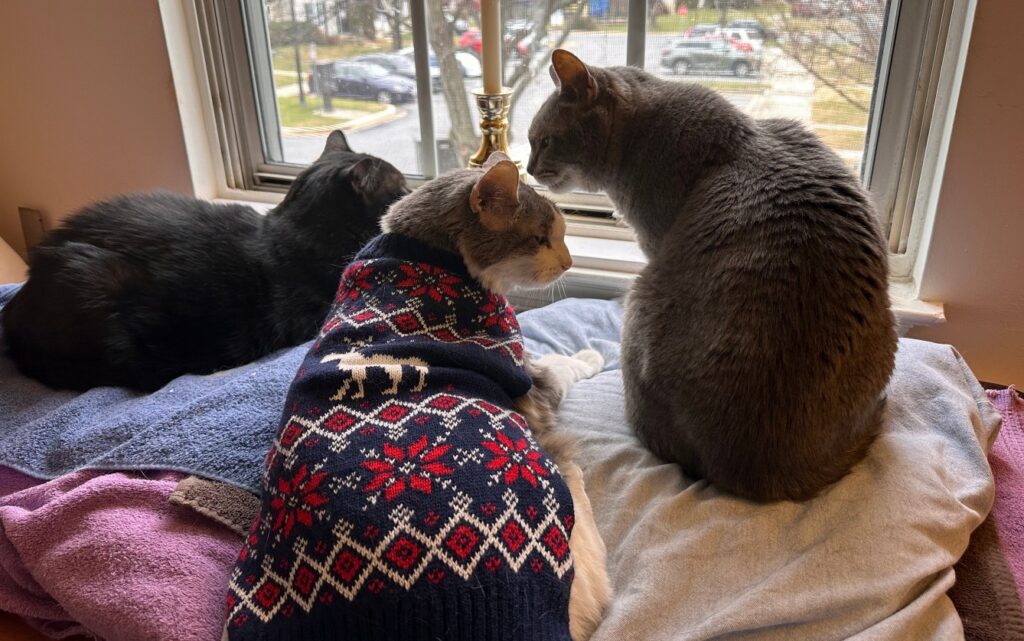
The bacteria from puncture wounds from cats’ teeth and claws can cause fatal infections in small animals. Cats themselves can carry diseases, whether toxoplasmosis or avian flu. In Virginia, cats are the fourth most common animal that test positive for rabies.
So, keeping cats indoors protects the cats themselves as well as birds and other wild critters. We cannot fault domestic cats, which are natural predators. But they are not part of a natural ecosystem outdoors.
The prognosis
To gain greater traction for the ideas behind One Health, Steve Osofsky also employs a concept called “planetary health” as a way of approaching the same challenges but through the lens of benefits to humans. Planetary health is a relatively new area of research that tries to answer specific questions about the human health implications of environmental changes we are causing, such as pollution, deforestation and loss of biodiversity.
Osofsky tries to convey this mission to his veterinary students at Cornell. He says that in spite of current political winds, he still believes that “saving the world is a growth industry.”
Annie Bradfield, executive director at BRWC, said, “Our work has always been about more than individual animals. Each patient helps us better understand the complex connections between wildlife, people and the environment we share. As we look ahead, our focus is on expanding research, training the next generation of wildlife professionals and using science-based education to prevent injuries and disease before they occur.
For more information
Blue Ridge Wildlife Center blueridgewildlifectr.org
Cornell K. Lisa Yang Center for Wildlife Health Wildlife.cornell.edu
Story from Outdoor America, Issue 1, 2026
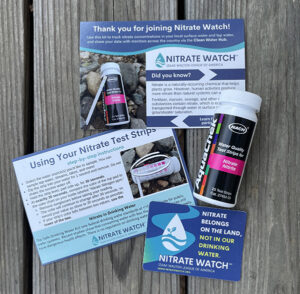 Your kit will include a bottle containing 25 nitrate test strips which you can use to test your water source(s) throughout the year. You’ll also receive postcards explaining how to use your nitrate test strips and how to share your Nitrate Watch results on the Clean Water Hub.
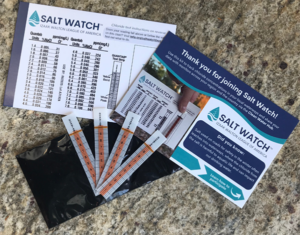 Your kit will include four test strips so you can test your waterway throughout the season. You’ll also receive a chart to help you interpret your results and a postcard with instructions for completing a Salt Watch test and reporting your findings.