Wetlands: Protecting Nature’s Water Filters (Webinar)
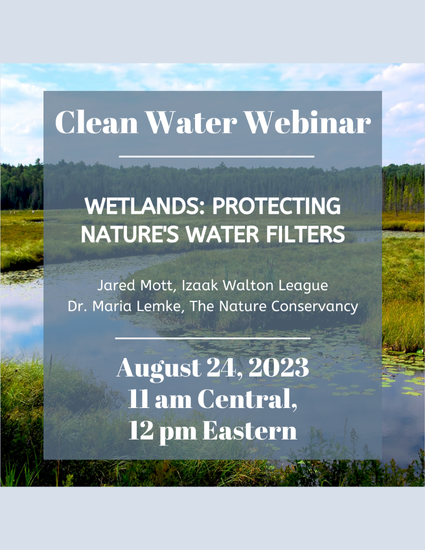
Wetlands perform valuable ecosystem services, but their protections have recently been weakened in a Supreme Court decision. Join us as we learn about the incredible capacity of wetlands to intercept…
Nitrate in Drinking Water: Public & Private (Webinar)
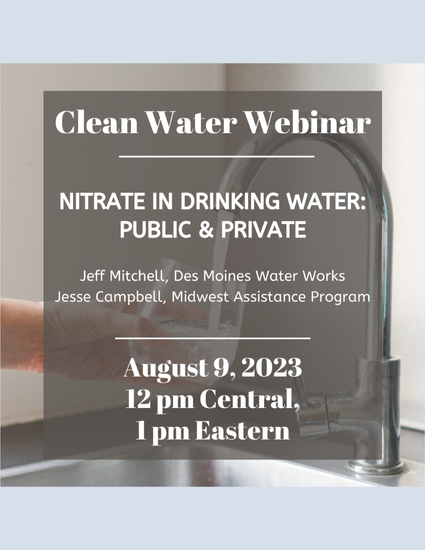
Join us for a discussion about the presence of nitrate in drinking water, the associated risks, and the removal process. We’ll hear from Jeff Mitchell, Lab Supervisor for Des Moines…
SOS Biological Data Form
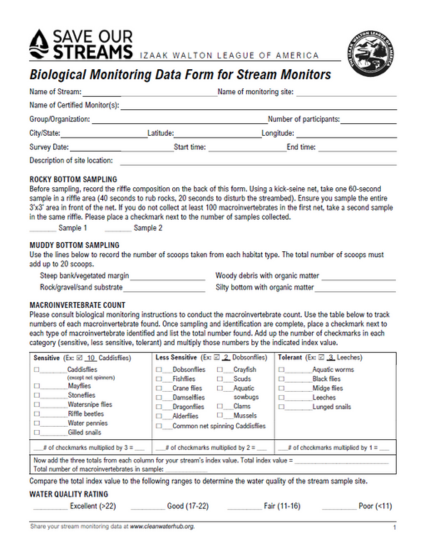
The datasheet to fill out while conducting Save Our Streams biological monitoring.
Nitrate Watch and the Fight Against Nutrient Pollution (Webinar)
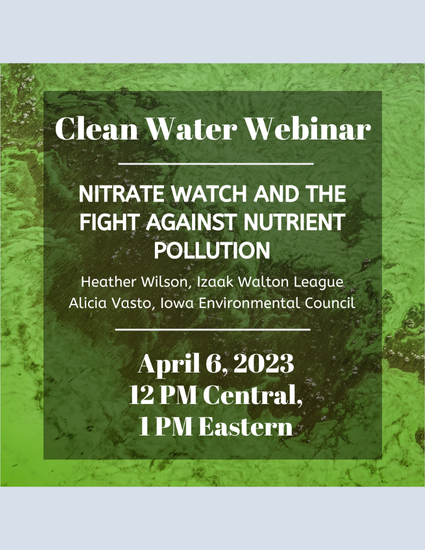
Join us as we introduce the Izaak Walton League’s new Nitrate Watch community science program and talk about efforts to protect our water from nitrate pollution. We’ll hear from Alicia…
Sharing Our Strategies: A Beginner’s Guide to Water Quality Communication (Webinar)
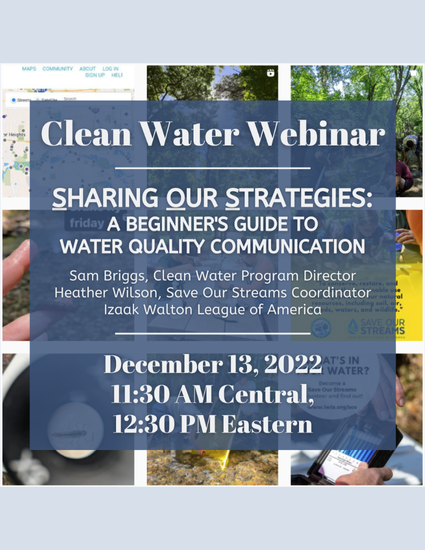
So you’ve got some interesting water quality data… now what? One of the most important parts of water quality monitoring is sharing your results! Izaak Walton League Clean Water Program…
SOS Biological Monitoring Instructions
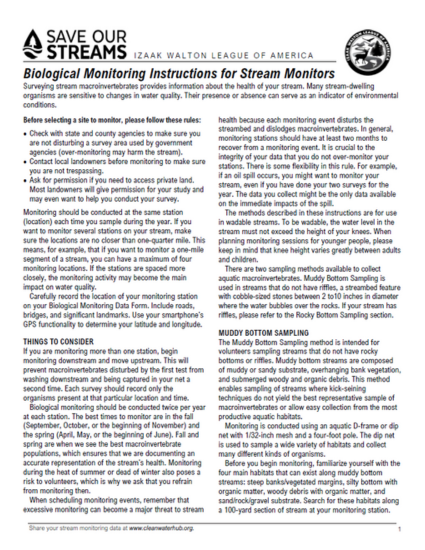
Detailed instructions on the Save Our Streams biological monitoring protocol.
SOS Chemical Data Form
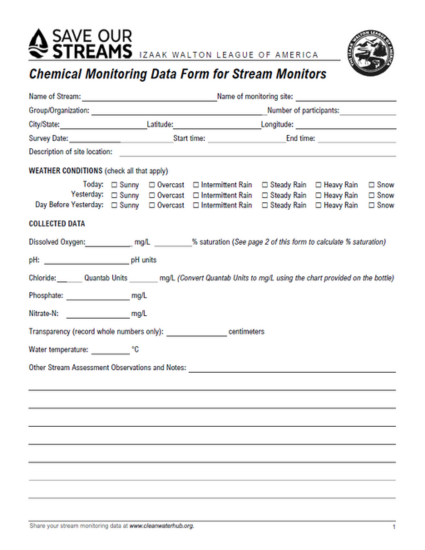
The datasheet to fill out while conducting Save Our Streams chemical monitoring.
Microscopic Organisms, Monumental Problems: Bacteria Pollution in Our Waters (Webinar)
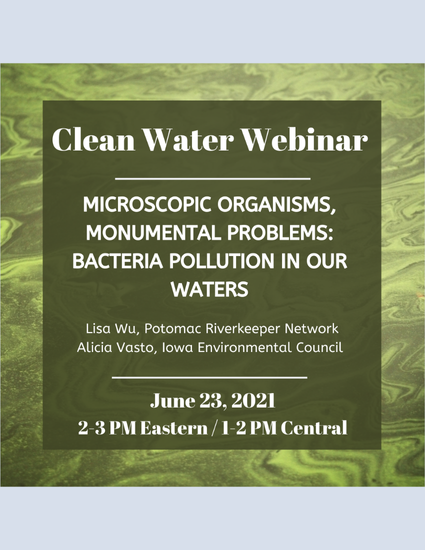
Microcystin, E. coli, manure, sewage… too frequently, these pollutants can be found in our streams, rivers and lakes. Though we can’t see bacteria with our naked eyes, we also can’t…
Beyond Monitoring: Protecting Your Waterways from Aquatic Invaders (Webinar)
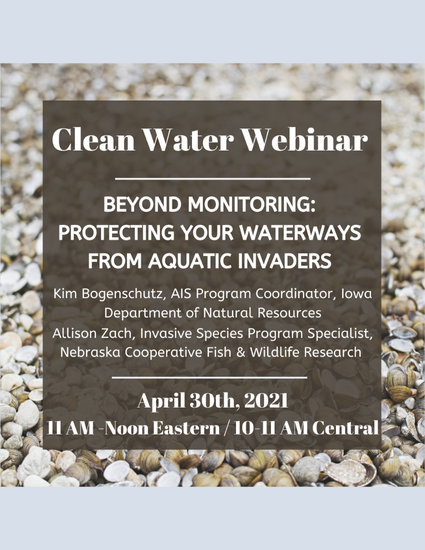
Aquatic Invasive Species (AIS) are non-native organisms whose introduction causes or is likely to cause economic or environmental harm, or harm to human, animal or plant health. These aquatic invaders…
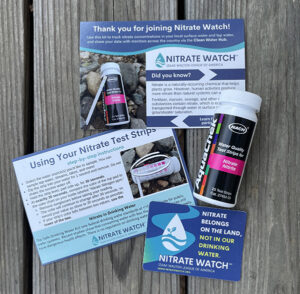 Your kit will include a bottle containing 25 nitrate test strips which you can use to test your water source(s) throughout the year. You’ll also receive postcards explaining how to use your nitrate test strips and how to share your Nitrate Watch results on the Clean Water Hub.
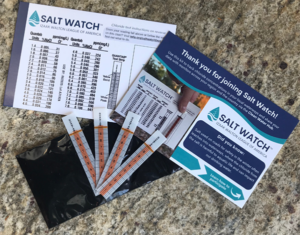 Your kit will include four test strips so you can test your waterway throughout the season. You’ll also receive a chart to help you interpret your results and a postcard with instructions for completing a Salt Watch test and reporting your findings.